
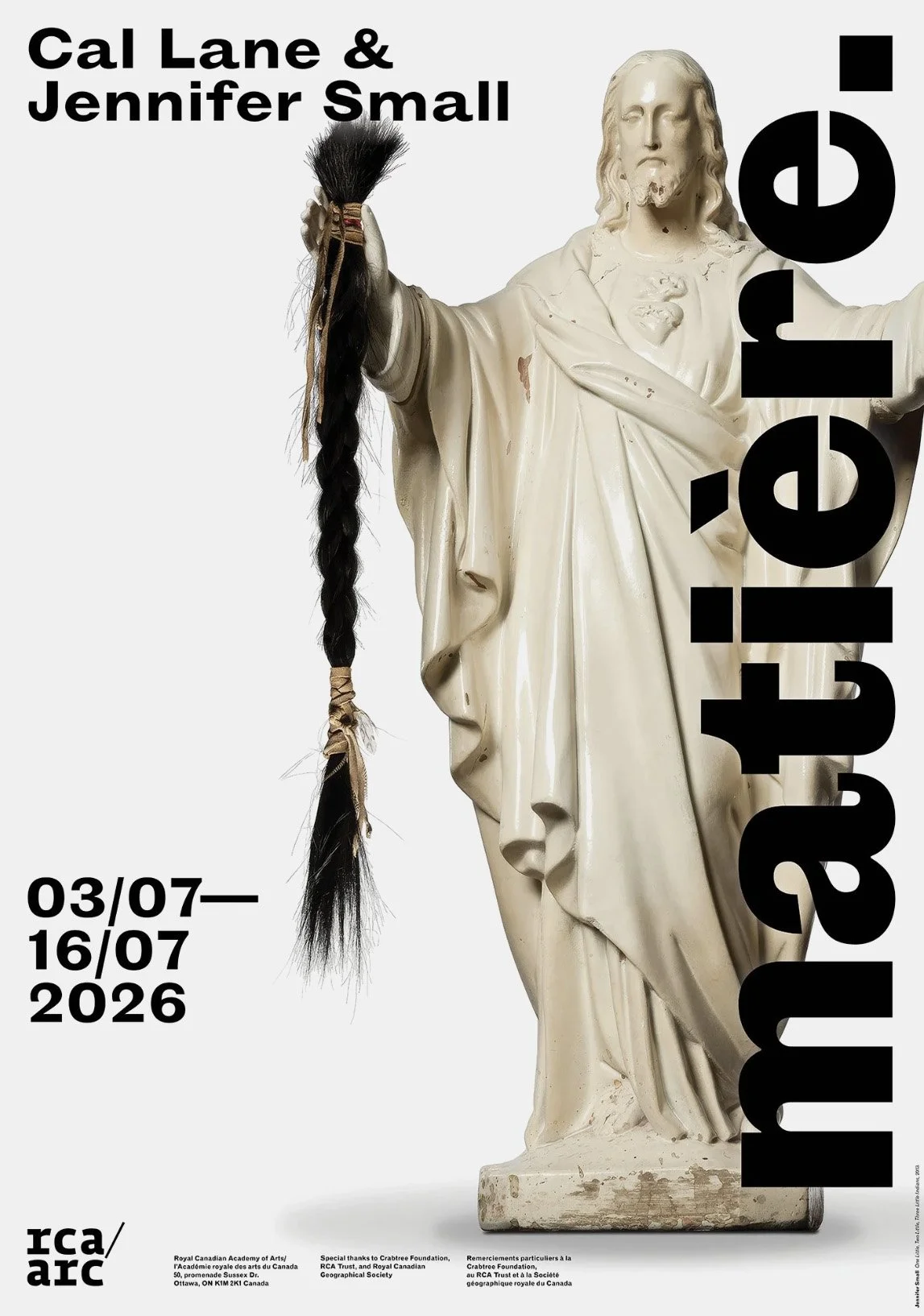
Matière: Cal Lane & Jennifer Small. Poster by Robert Tombs, 2026
Exhibition, symposium and performance programming (2018–26)
—Passages, the RCA’s artist/designer speaker series, was inaugurated during our 2018 AGM weekend at Ottawa Art Gallery. Passages 2.0 was held the following year at Agnes Etherington Art centre. Beginning in 2020, following Covid’s arrival, Passages migrated to on-line delivery. Passage’s intent is to celebrate selected strains of progressive art and architecture, as difficult as they might be to locate. Speakers to date have been Mary Anne Barkhouse, Michael Belmore, Deanna Bowen, Todd Colbourne, Luc Courchesne, Rosalie Favell, Blake Gopnik, Mitchell Hall, Kevin King, Roger Michel, Gordon Monahan, Marina Roy, Annie Thibault, Henk van Assen, Dr. Zainub Verjee, and Jinny Yu.
—Matière: Cal Lane & Jennifer Small (2026)
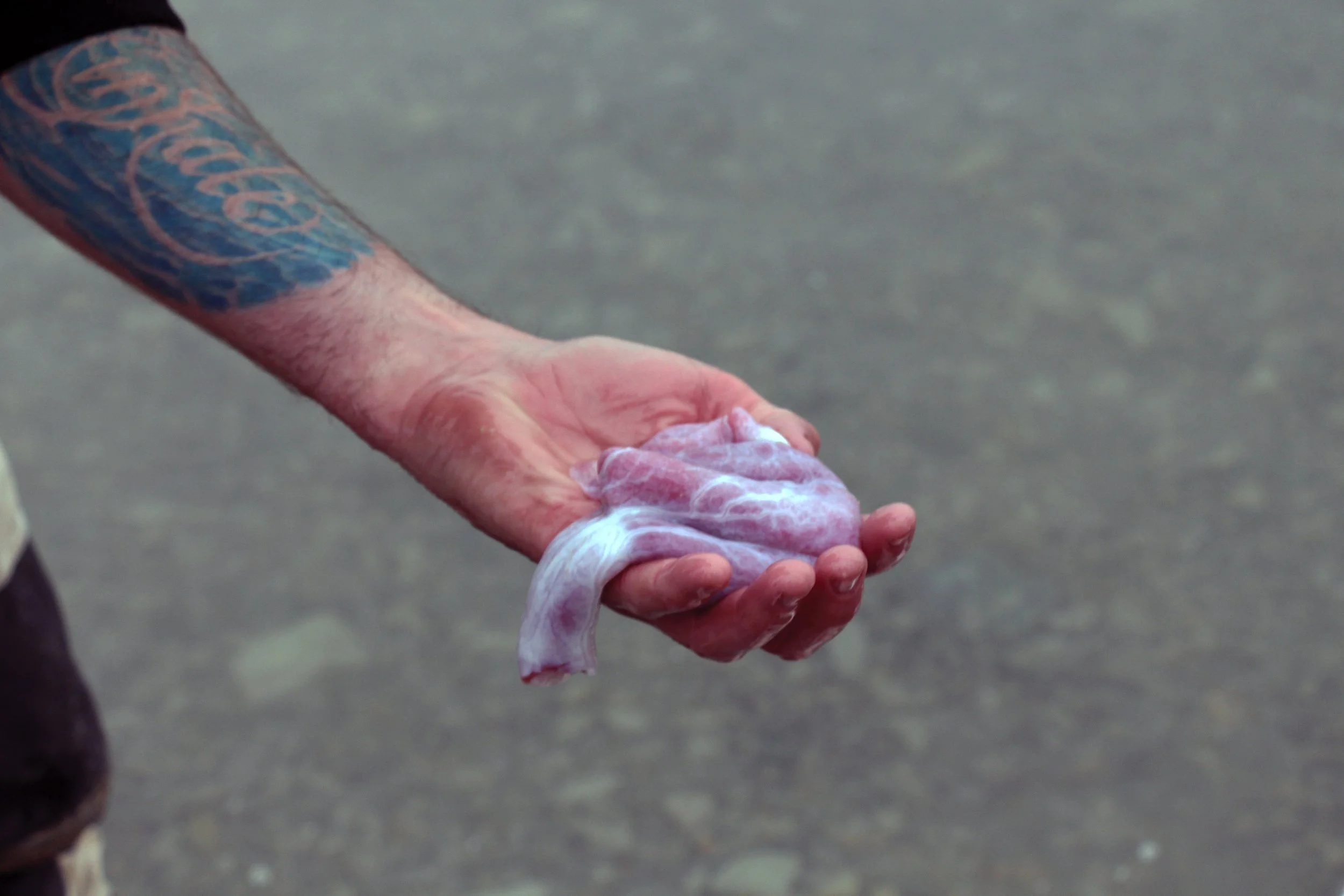
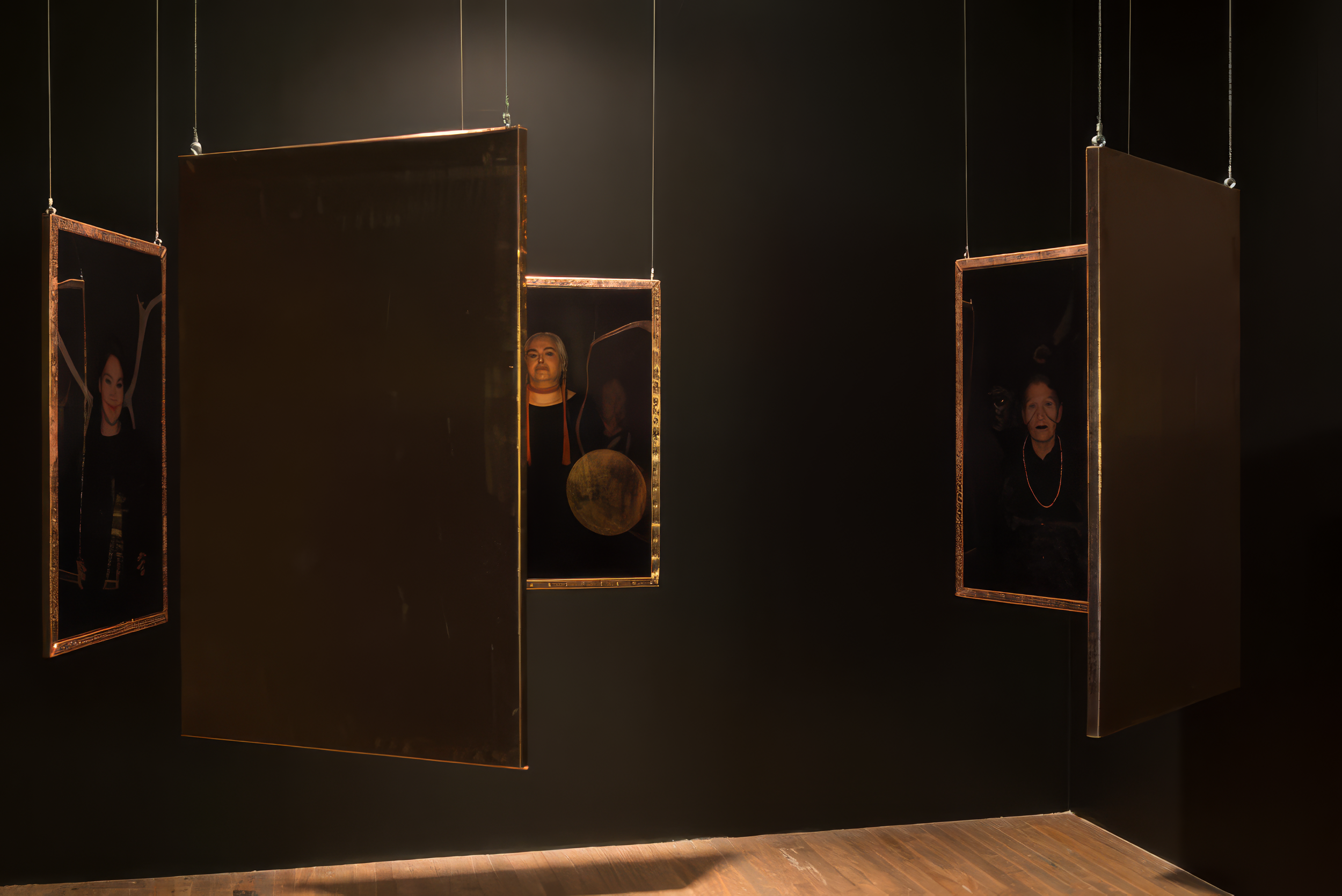
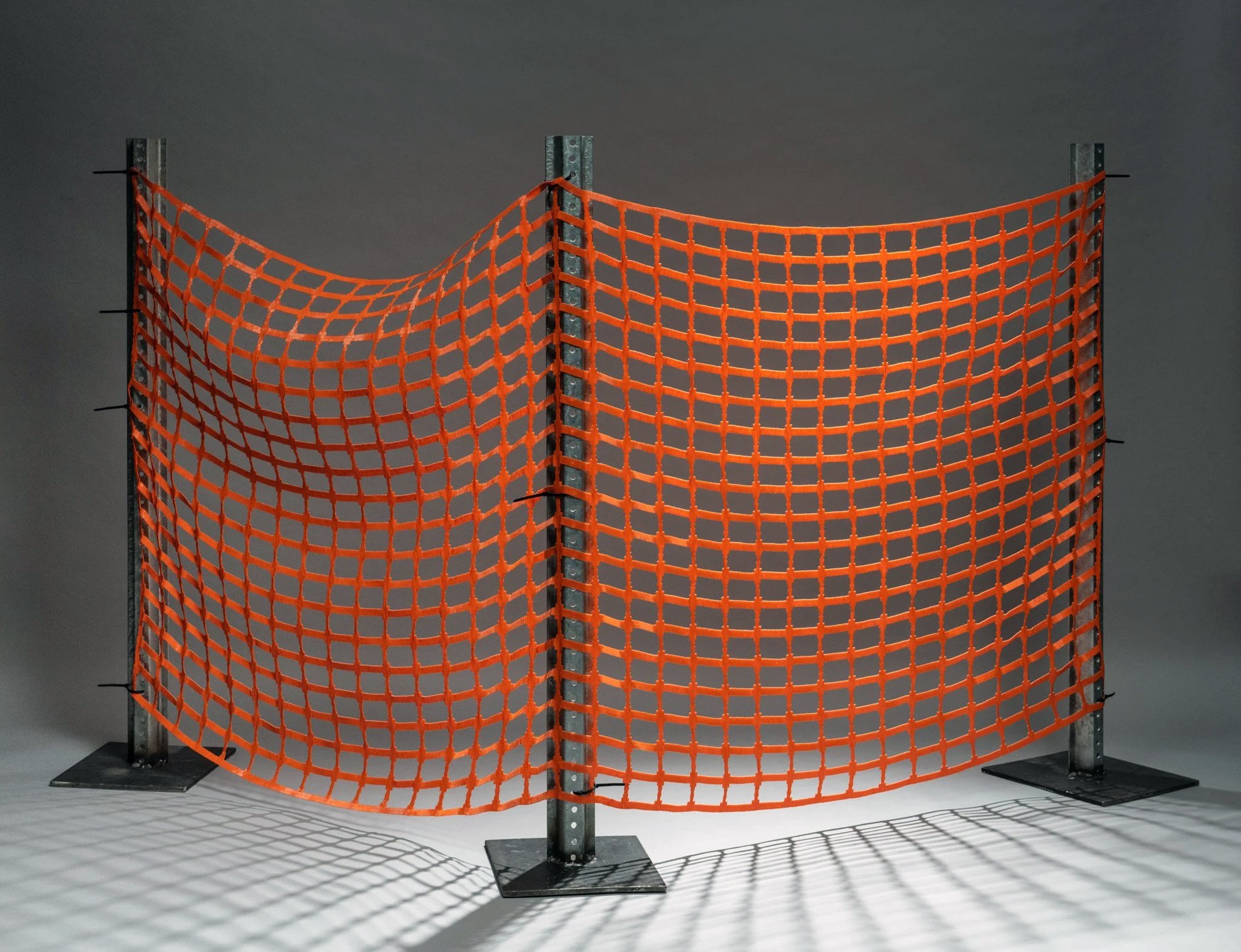
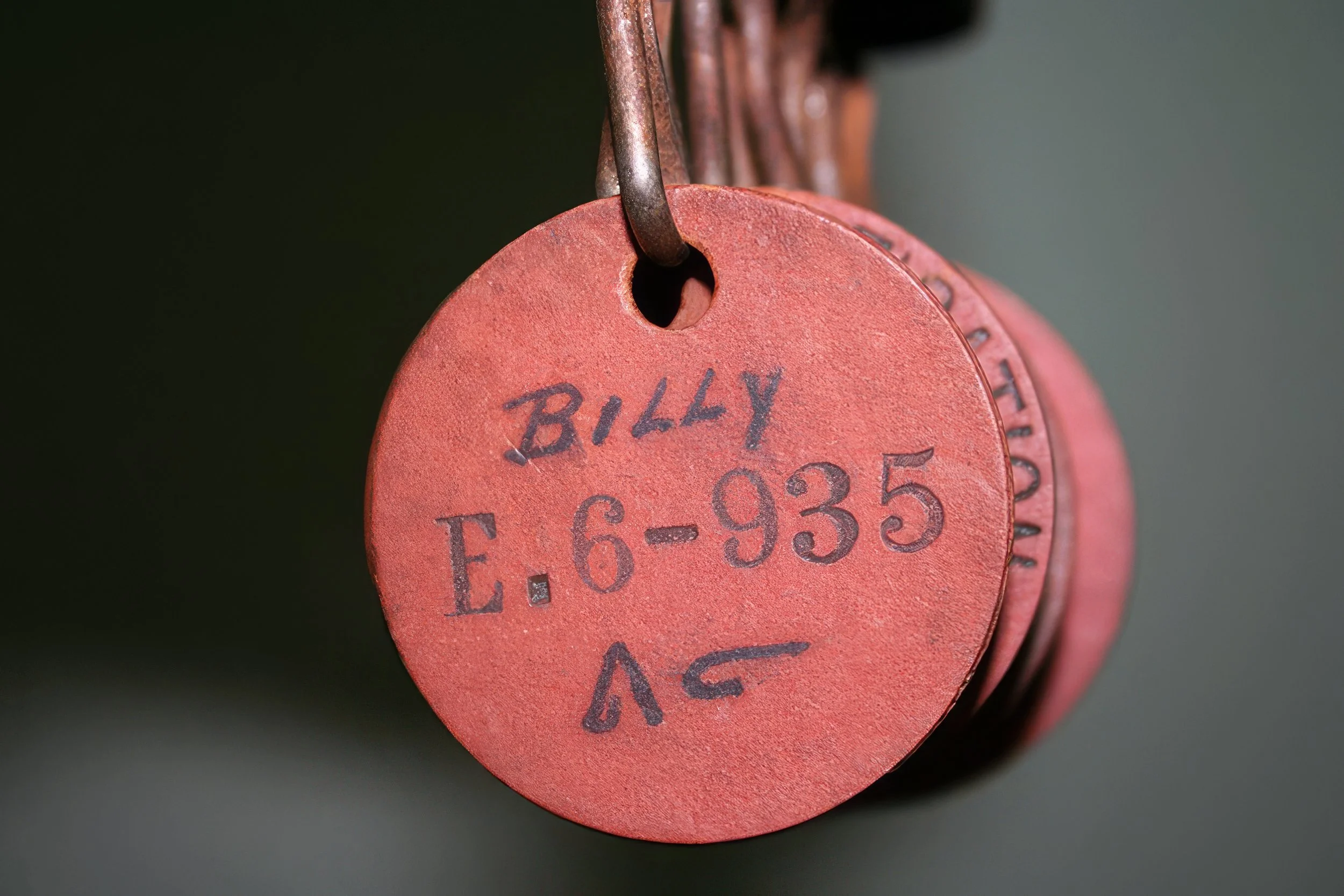
As an extraordinary exhibition of miniatures, Duchampian ‘readymades’, and large steel sculptures by contemporary Canadian sculptors Cal Lane and Jennifer Small, Matière continued our series of two-person exhibitions in the Upper Gallery space begun in 2022.
Artist Josef Albers codified the word ‘matière’ at the Bauhaus in the 1920s where, as Fritz Horstman has written, his ‘matière’ teaching project “addressed a student’s haptic and phenomenological capabilities through very straightforward manipulations and combinations of materials.” While expressing materiality is a signature element of Small and Lane’s work, exhibiting a sensitivity to materials alone does not assure the success of their work. It is merely the exquisite portal through which metaphor and satire enter the equation. See the brochure here.
July 3 to July 16, 2026 Hours: 10 am to 4 pm, closed Sundays Royal Canadian Academy of Arts
50 Sussex Drive
Ottawa, ON K1M 2K1
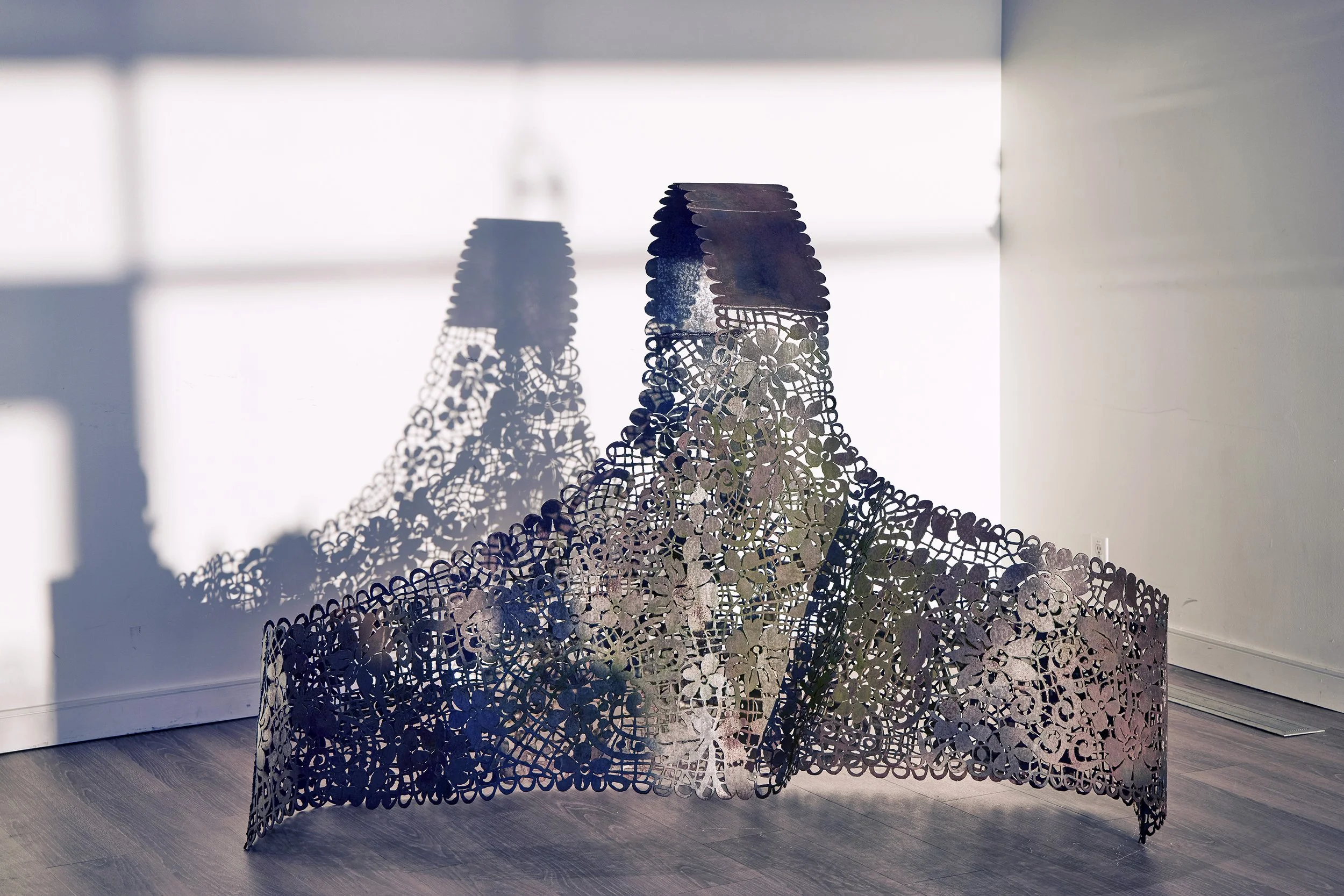
Cal Lane, Big Panties, 2018
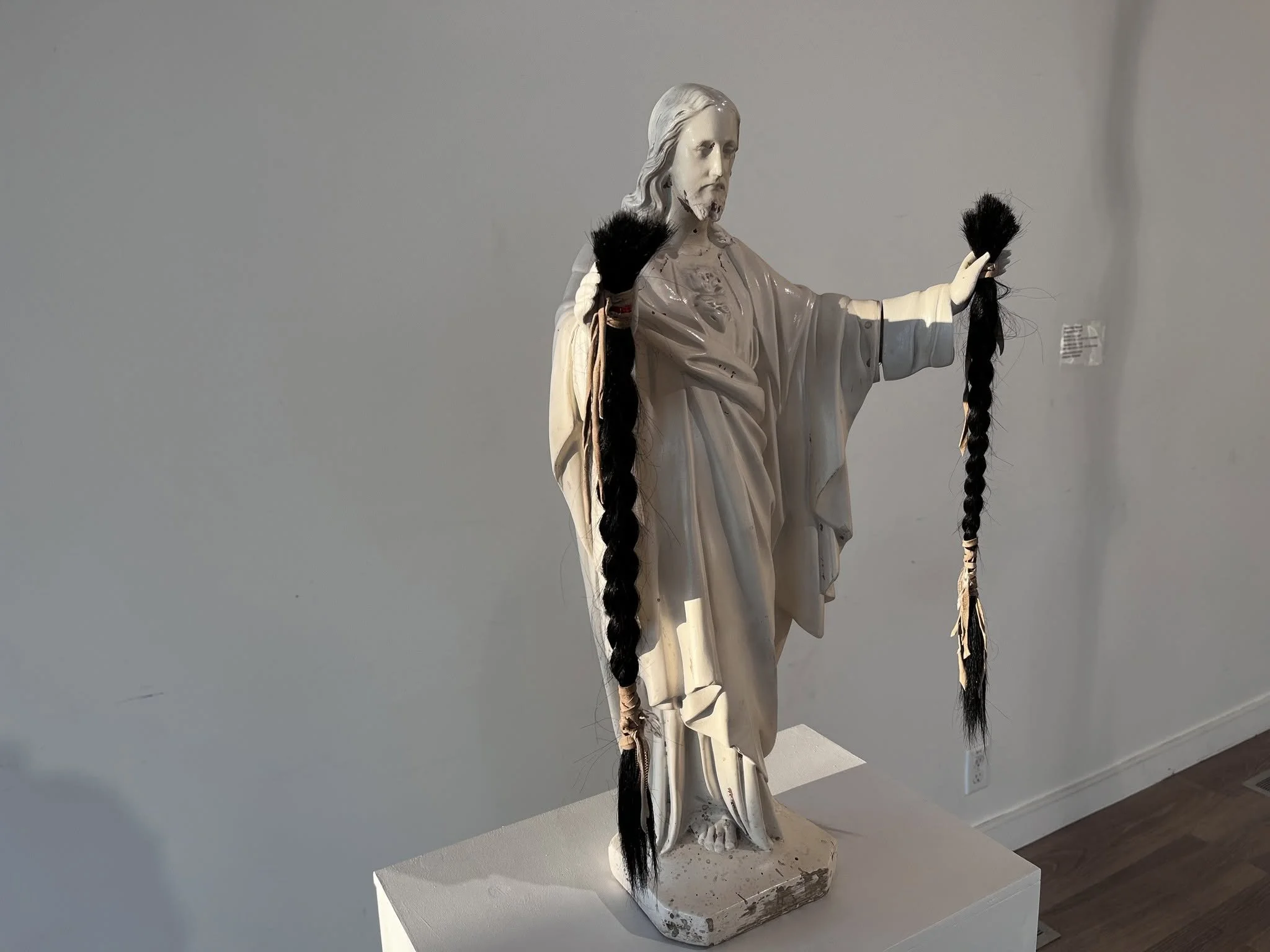
Jennifer Small RCA, One Little, Two Little, Three Little Indians, 2013
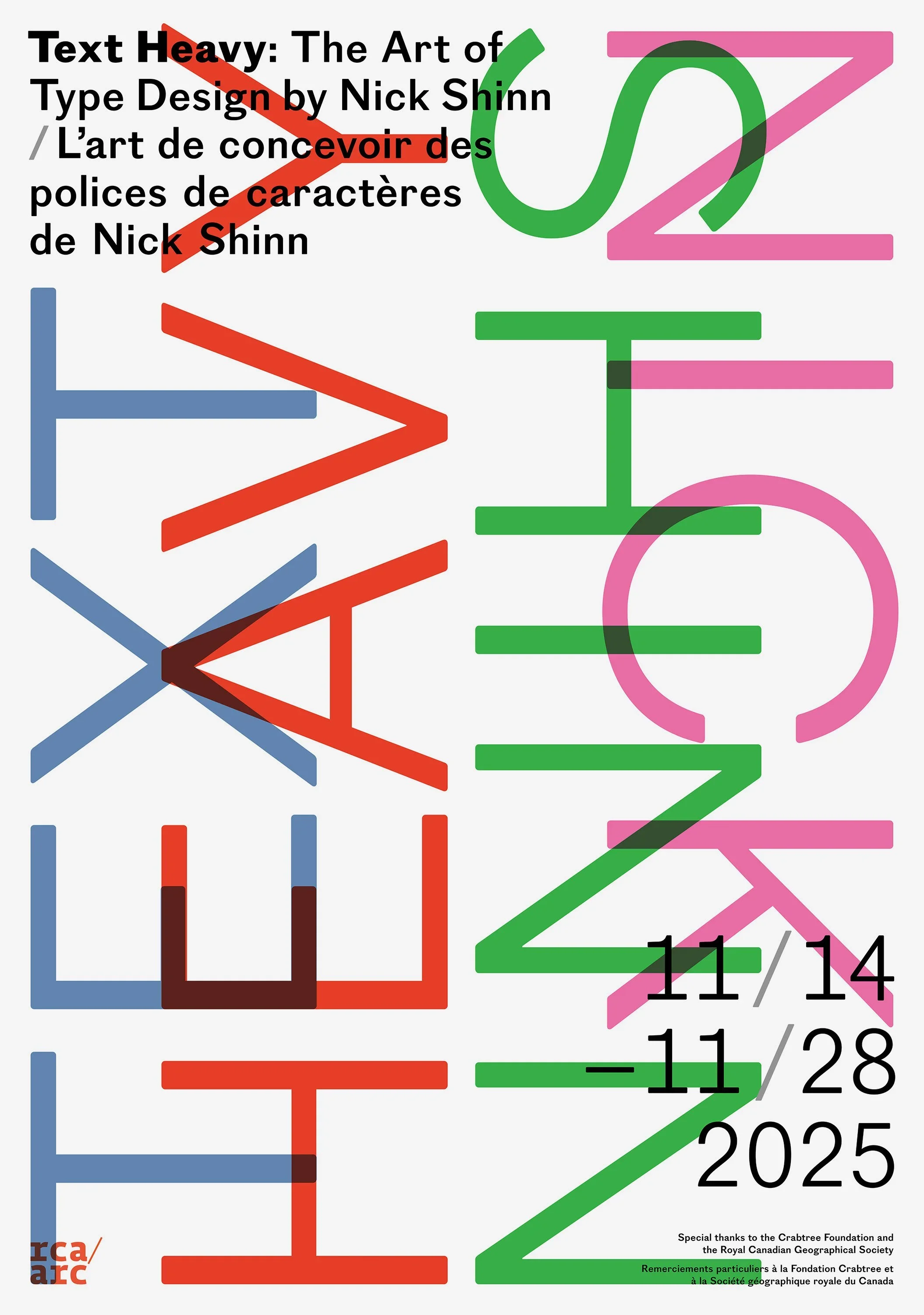
Text Heavy: The Art of Type Design by Nick Shinn. Poster by Henk van Assen, 2025
—Text Heavy: The Art of Type Design by Nick Shinn (2025)
The exhibition Text Heavy: The Art of Type Design by Nick Shinn, curated by graphic designers Robert Tombs and Henk van Assen, presented the type design work of British-born, Canadian-based type designer Nick Shinn, RCA at the Royal Canadian Academy of Arts. It comprises a selection of font designs expressed in printed matter, photography, video and textiles by Shinn. Additionally, Weltformat posters using exclusively the exhibition’s poster text were commissioned from twelve Canadian and international graphic designers to suggest the process of type usage in which the type designer creates and sells fonts, yet has no influence over their use by third parties. These designers were Derwyn Goodall (Canada); Bob Beck (USA/Canada); Udo Schliemann (Germany/Canada); Kyung Park (South Korea/USA/Canada); Alice Chung, Karen Hsu, Julie Cho, and Nick Massarelli (USA); Luiza Dale (Brazil/USA); Lobbin Liu (China/USA); Tomas Hlava (Czechia/USA); Henk van Assen (the Netherlands/USA); Sulki and Min, and Kyungsun Kym (South Korea); and Frida Medrano (Mexico). The exhibition also included twelve Shinn-designed ink jet banners hanging from the roof trusses, each proclaiming a slogan or quotation in a single Shinntype font. While comprehensive and self-referential, the exhibit also implicitly acknowledged several key inventions on which the contemporary type designer depends, Johannes Gutenberg’s movable-type (1440), and the Apple computer (1976).
November 14 to November 28, 2025 Hours: 10 am to 4 pm, closed Sundays Royal Canadian Academy of Arts
50 Sussex Drive
Ottawa, ON K1M 2K1
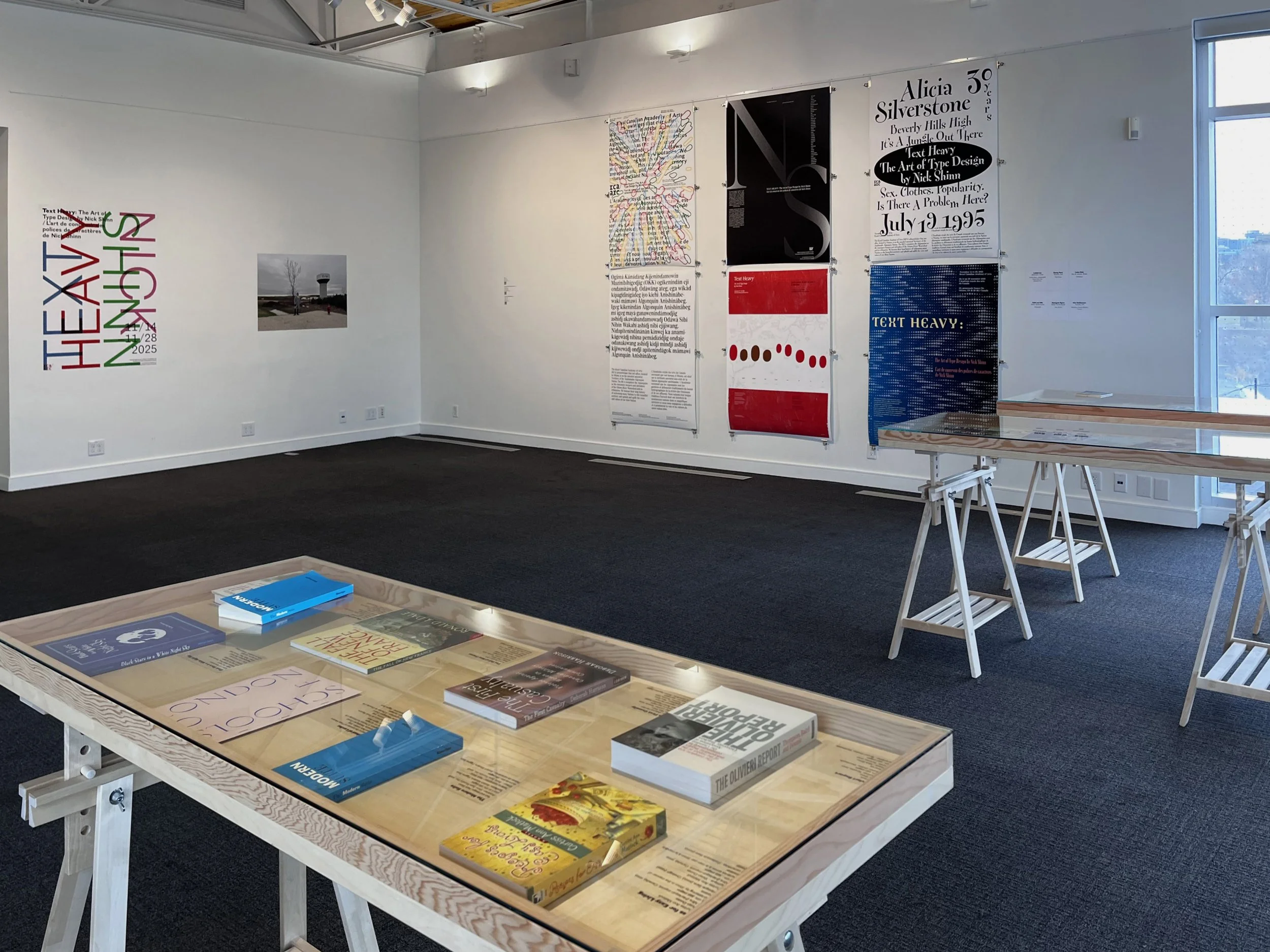
Text Heavy: The Art of Type Design by Nick Shinn installation, Upper Gallery
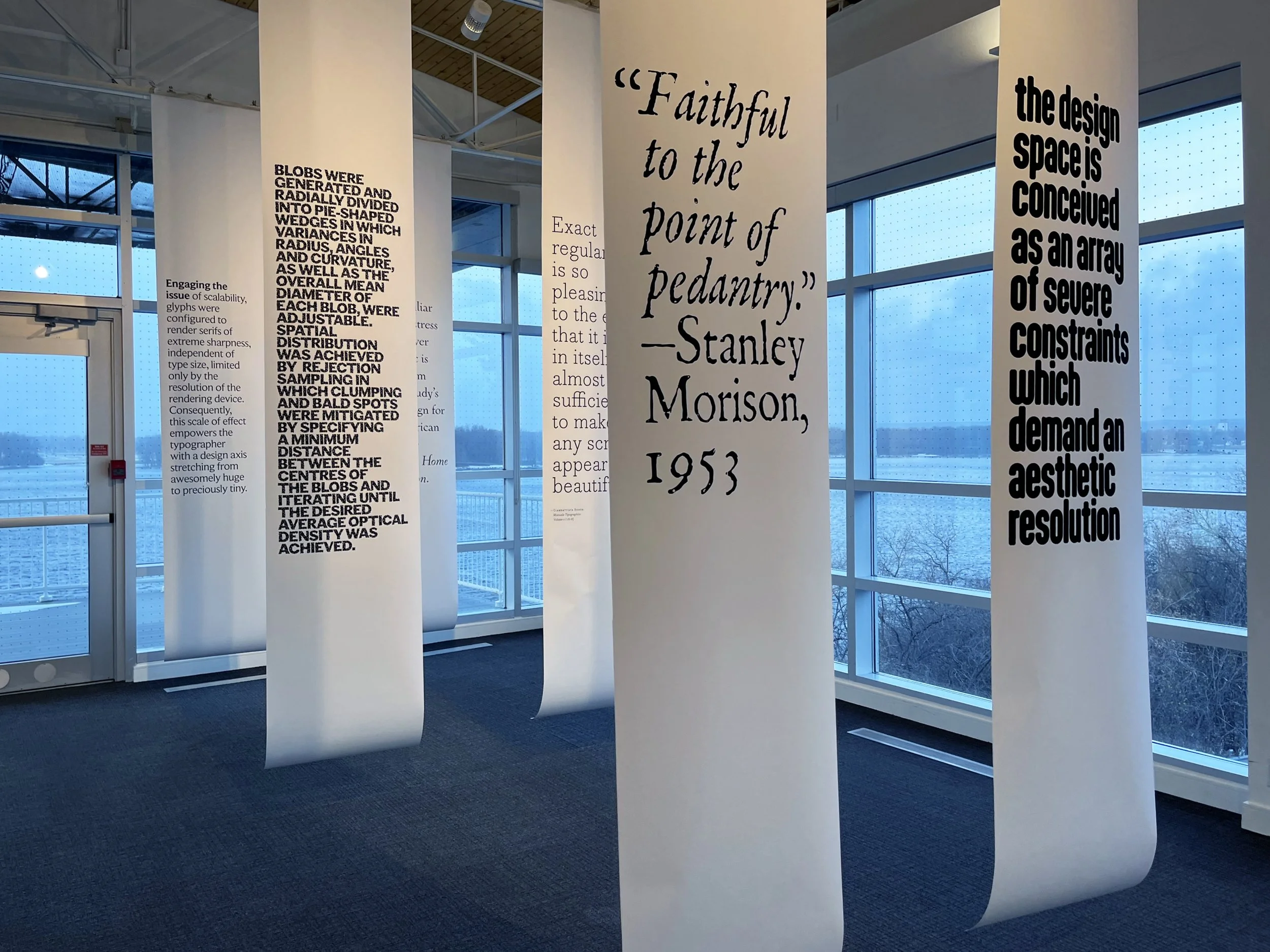
Text Heavy: The Art of Type Design by Nick Shinn installation, Upper Gallery
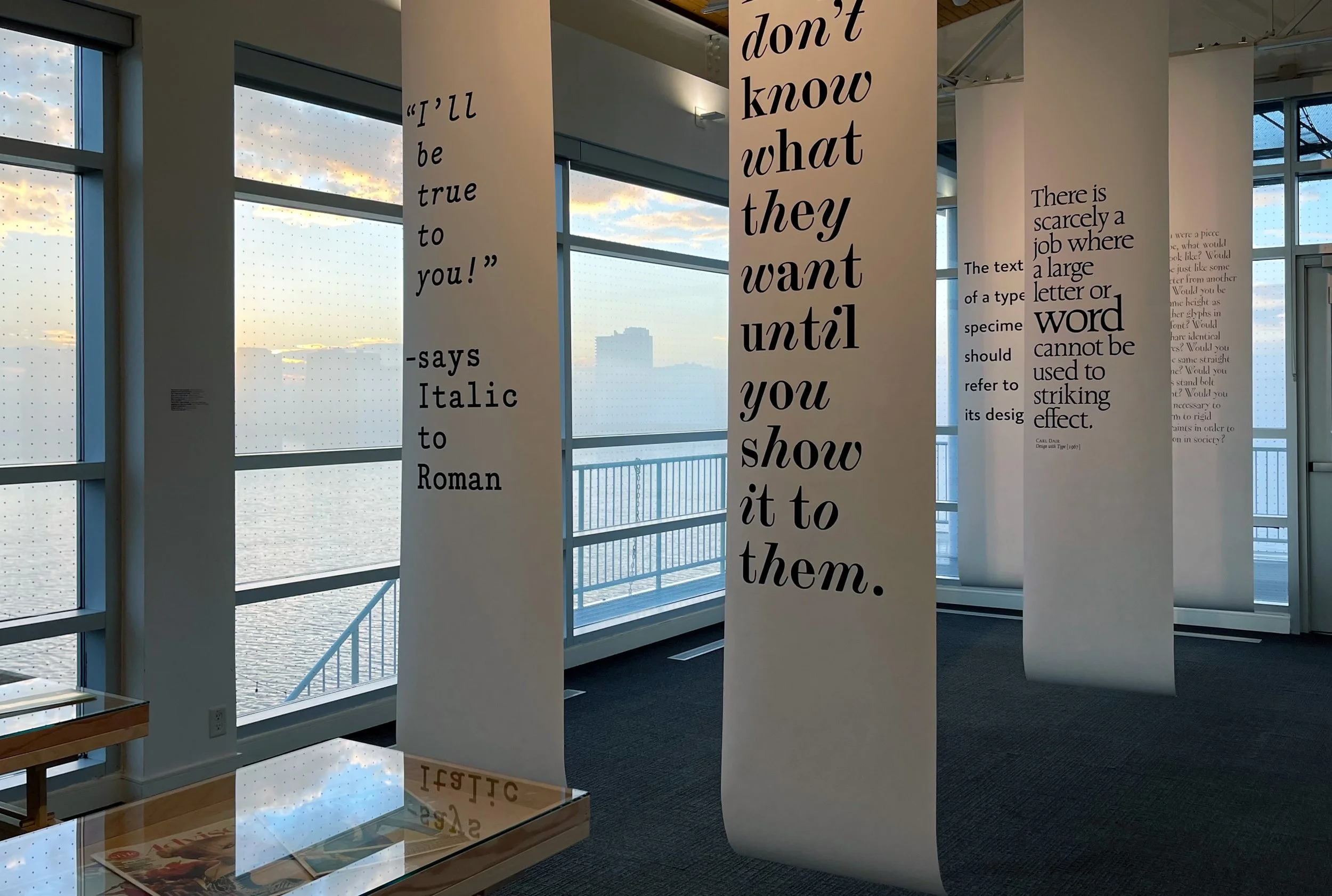
Text Heavy: The Art of Type Design by Nick Shinn installation, Upper Gallery
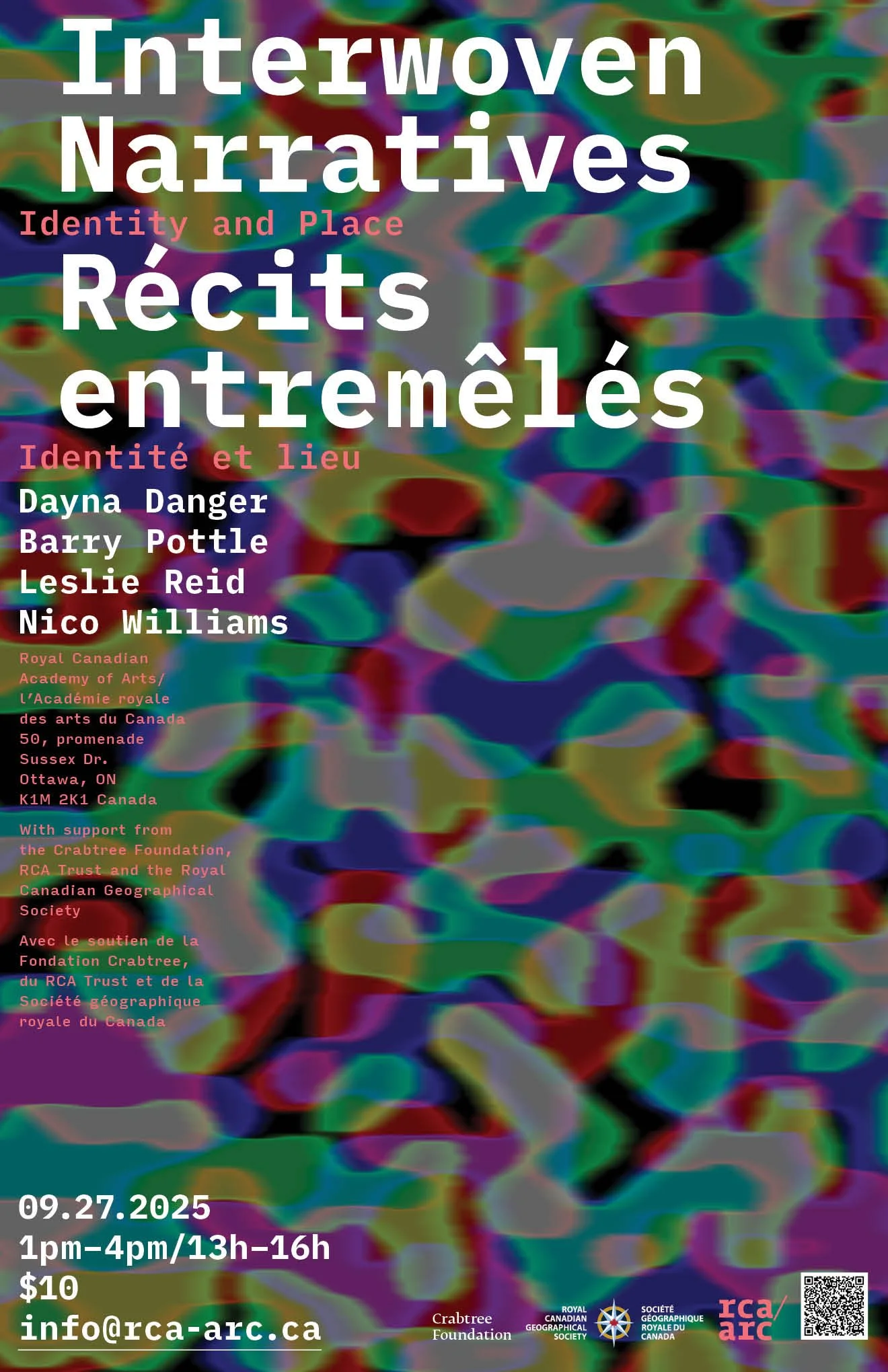
Interwoven Narratives: Identity and Place. Poster by Robert Tombs and Sonia Bazar, 2025
—Interwoven Narratives: Identity and Place (2025)
An in-depth artist talk featuring Dayna Danger, Nico Williams, Barry Pottle and Leslie Reid which will be opened by Elder Barbara Dumont-Hill who is Algonquin Anishinabeg from the Kitigan Zibi community in Quebec. She has served as a Knowledge Keeper at Carleton University since 2018. Recently Barbara received an Honorary Doctorate in Law from Carleton University to recognize her outstanding contributions and tireless work supporting Indigenous youth. Dayna Danger and Nico Williams, in particular, engage with gender and sexuality through the lens of Indigenous resurgence and material knowledge. Danger’s large-scale portraits and performance-based work center Two-Spirit, transgender, and non-binary kin, using symbolism drawn from BDSM and kink communities to interrogate power, visibility, and consent. Their work challenges colonial projections and affirms complex, embodied identities through collaborative, process-based methods. Williams, whose sculptural beadwork practice is both contemporary and community-focused, transforms geometric abstraction into a site of cultural continuity and innovation. Active in urban Indigenous networks and pedagogy, his work bridges traditional knowledge and cutting-edge form, often in dialogue with collective practices and public space.
Barry Pottle’s photographs document the lived experience of being an Urban Inuk in Ottawa — a reality underrepresented in the national imagination. His work captures the intimacy of cultural gatherings, urban life, and quiet moments in nature, asserting the presence and vitality of Inuit communities beyond the North. While some of his images are quite humorous, some are somber. Barry’s experience in the Canadian residential school system can also be felt in his more emotional photos. Leslie Reid, working from a Settler perspective, explores the atmospheric and psychological impact of Arctic landscapes, bearing witness to both the beauty and fragility of Northern environments affected by colonial histories. Her photographs work in concert with scientific research. In 2022, Leslie was invited to join Dr. Luke Copland, professor in the Department of Geography, Environment and Geomatics, University of Ottawa, and his graduate students on their maintenance trip to the Icefield and glacier system. Barry and Leslie will be discussing ‘New Topographies’, their recent and first exhibition together. Dayna Danger, Barry Pottle, Leslie Reid, and Nico Williams — four artists whose practices offer powerful meditations on identity, land, and cultural continuity across Inuit, Métis-Saulteaux-Polish, Anishinaabe, and settler perspectives. Through the work of these artists, 'Art becomes a site for both resistance and healing — a way to make visible the stories and experiences that are often overlooked or erased. The symposium was organized by the RCA’s Administrator/Curator, Sonia Bazar.
September 27, 2025, 1–4pm
Royal Canadian Academy of Arts 50 Sussex Drive
Ottawa, ON K1M 2K1
Tickets: $10
Leslie Reid RCA, Heartbeat, 2015
Dayna Danger RCA and Émilie Monnet, Wishes, 2017
Nico Williams, Barrière, 2023
Barry Pottle, from The Awareness Series, 2009–2011
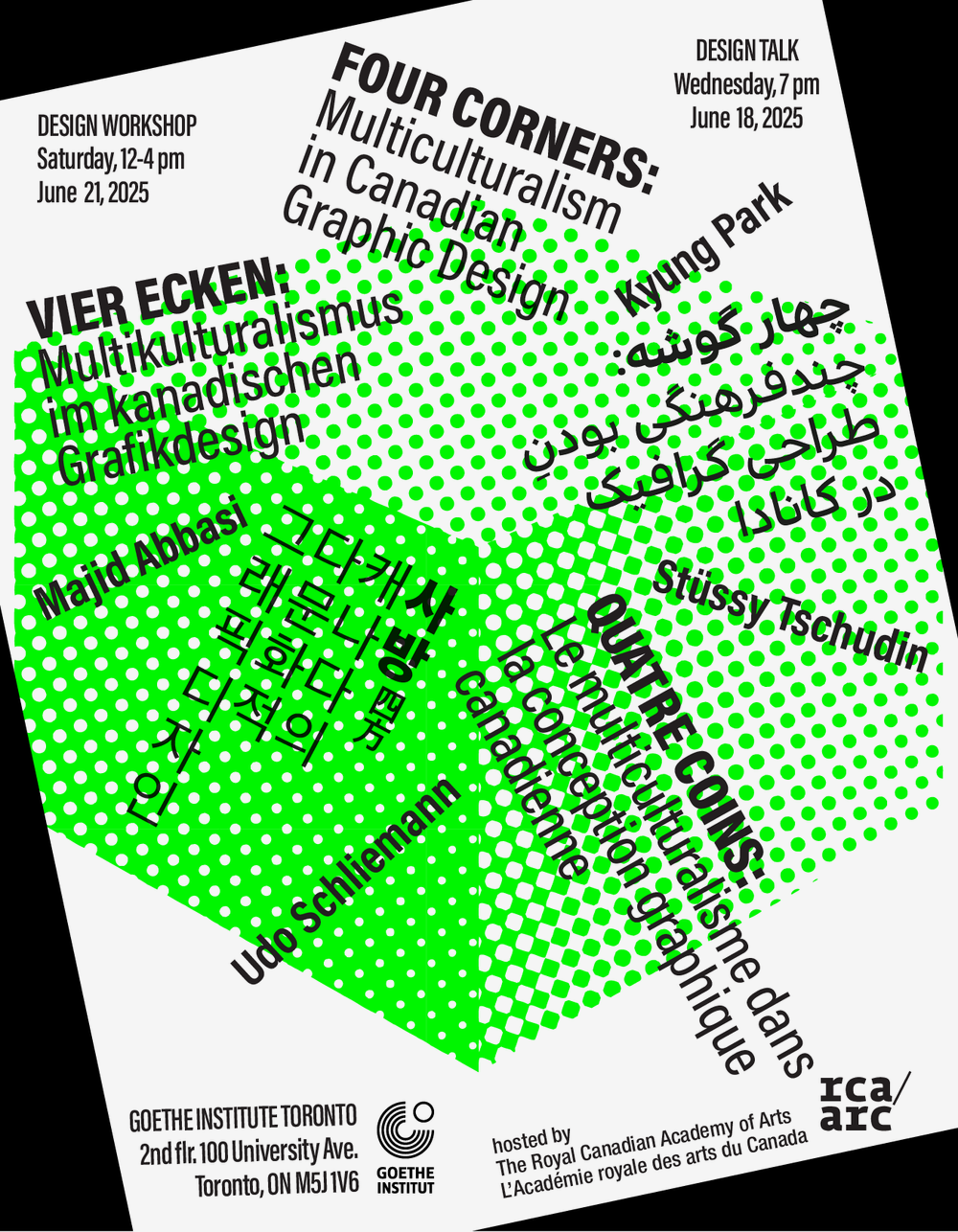
Four Corners: Multiculturalism in Canadian Graphic Design. Poster by Kyung Park, 2025
—Four Corners: Multiculturalism in Canadian Graphic Design (2025)
Canadian graphic design has greatly benefited from the rich knowledge and cultural uniqueness of immigrant designers from abroad who have made Canada their home. Fostered by government-funded programs in the ’60s — of the arts in general and design in particular — many newly-arrived designers introduced rich and unique solutions informed by their national design traditions which included English, Dutch, Swiss and German modernist sensibilities. How has this influence evolved? Four Corners: Multiculturalism in Canadian Graphic Design speakers were Kyung Park (South Korea), Majid Abbasi (Iran), Stüssy Tschudin (Switzerland), and Udo Schliemann (Germany). There were also be parallel workshops in Korean Hangul letterform design, led by Kyung Park and Persian script, led by Majid Abbasi. The lecture was held on June 18 (from 6 – 9 pm) while the workshop was held on June 21 (from 12 – 4 pm) at:
Goethe-Institute Toronto 100 University Avenue, 2nd floor Toronto, ON M5J 1V6 Student/RCA member: $10.00
General admission: $15.00
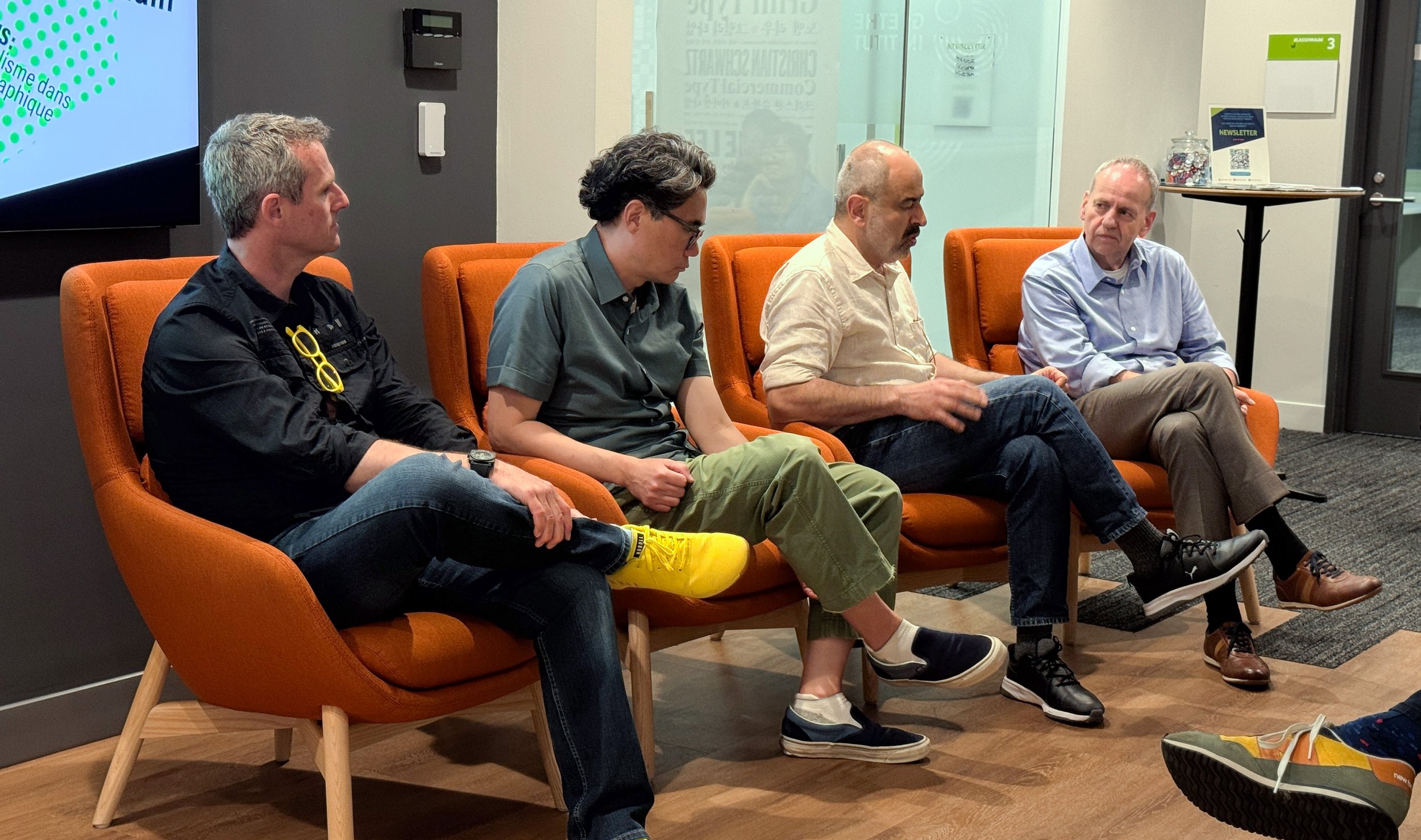
Four Corners RCA member-speakers, from left: Stüssy Tschudin (Switzerland/Canada); Kyung Park (South Korea/USA/Canada; Majid Abbasi (Iran/Canada); Udo Schliemann (Germany/Canada)
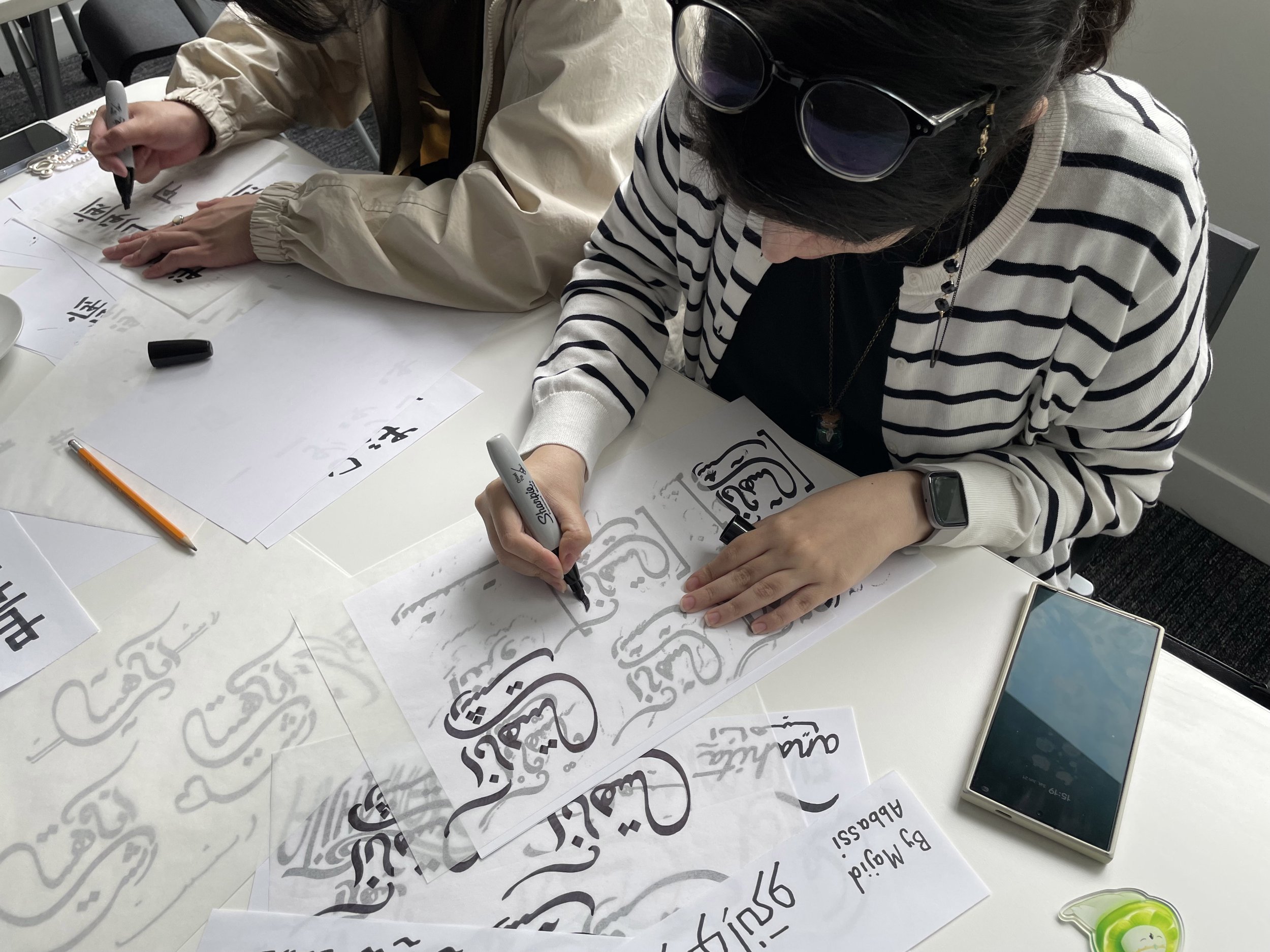
Student’s practicing Persian script in Majid Abbasi’s Four Corners workshop
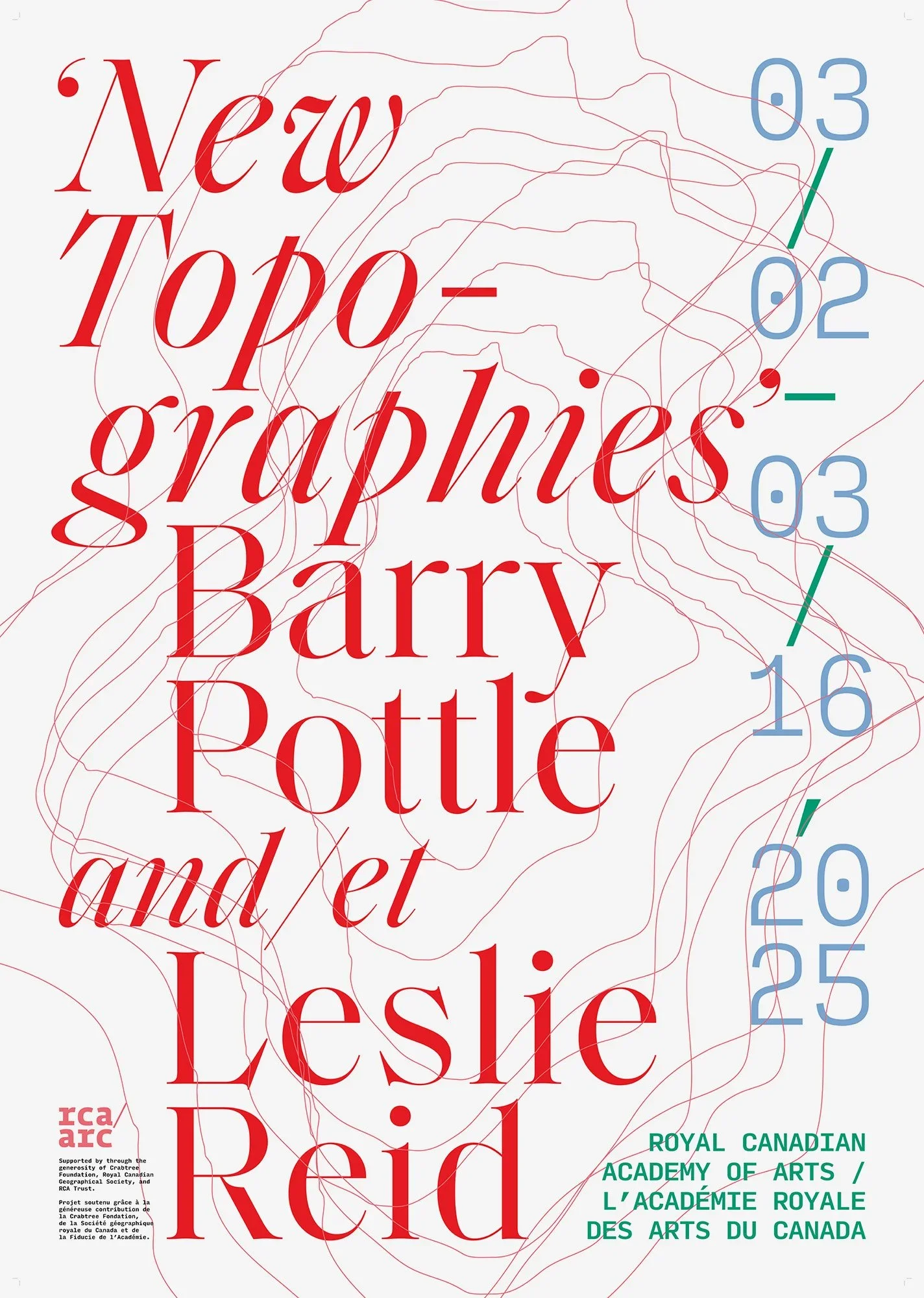
‘New Topographies’: Barry Pottle and/et Leslie Reid. Poster by Henk van Assen, 2025
—‘New Topographies’: Barry Pottle and/et Leslie Reid (2025)
Pottle describes himself as an “Inuk urban photographer” while Reid identifies as “a Settler urban dweller.” While Pottle has largely photographed the urban scene, Reid has travelled numerous times to the Canadian Arctic in recent years in order to create works in painting, photography and video. Each artist will create new works that address social justice through depictions of landscape. In Susan Sontag’s 1977 collection of essays On Photography, she writes that “In teaching us a new visual code, photographs alter and enlarge our notions of what is worth looking at and what we have a right to observe. They are a grammar and, even more importantly, an ethics of seeing.” Photographs also include the embedded though not necessarily clear motives of their makers, and can be edited by skilled retouchers such as those Stalin used to airbrush away official enemies, or by Photoshop. And while widely-accepted as documents of truth photographs might alternately be tokens of falsity. Moving beyond the territory of ‘the self’ that many artists are anchored to, Reid and Pottle, in the work of ‘New Topographies’, managed the abovementioned risks to formulate cogent and ethical ‘responsibility statements’ about global warming for the greater good.” See the catalogue here.
March 2 to March 16, 2025 Hours: 10 am to 4 pm, closed Saturdays Royal Canadian Academy of Arts
50 Sussex Drive
Ottawa, ON K1M 2K1
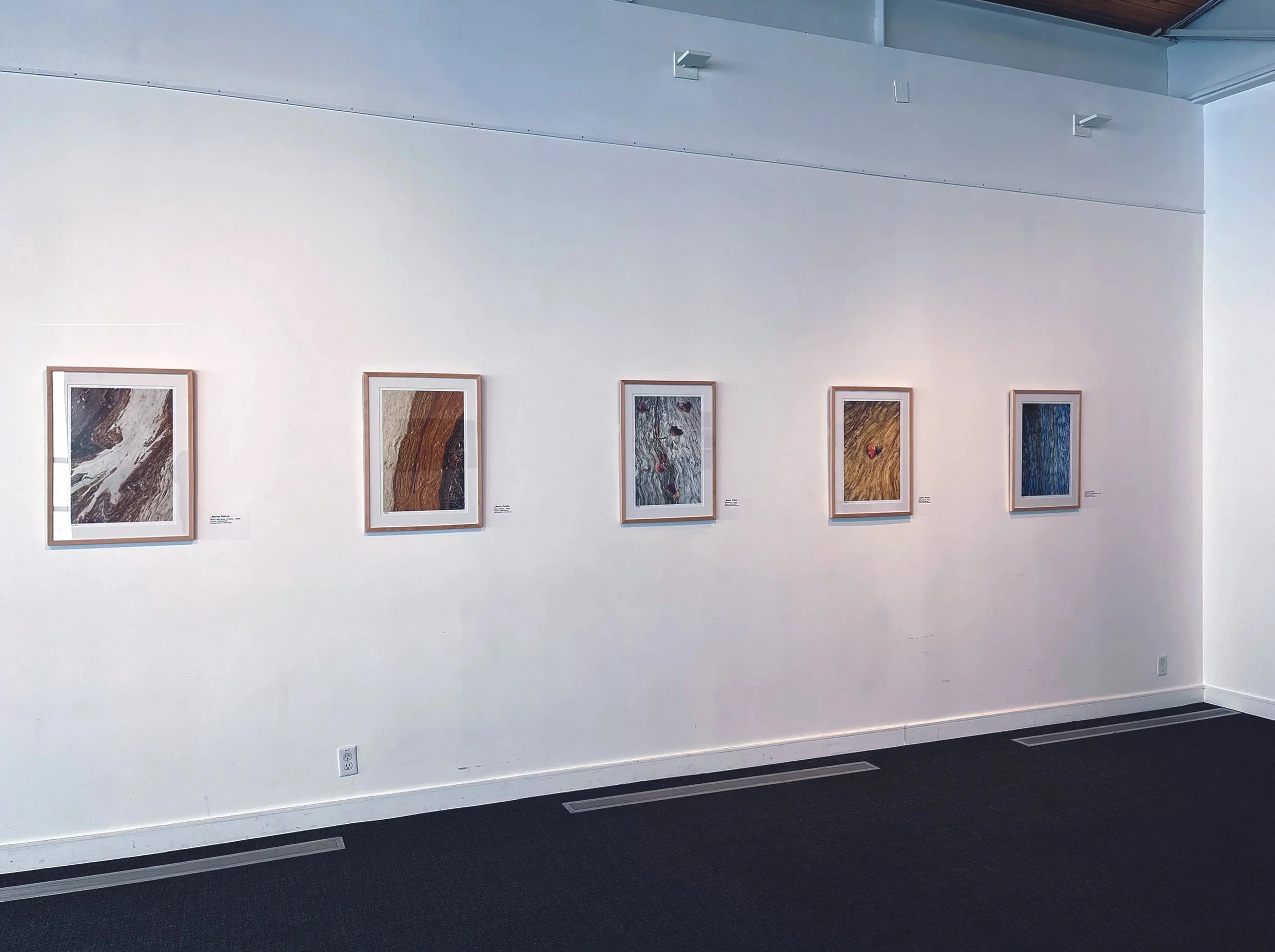
Barry Pottle’s installation from ‘New Topographies’, Upper Gallery
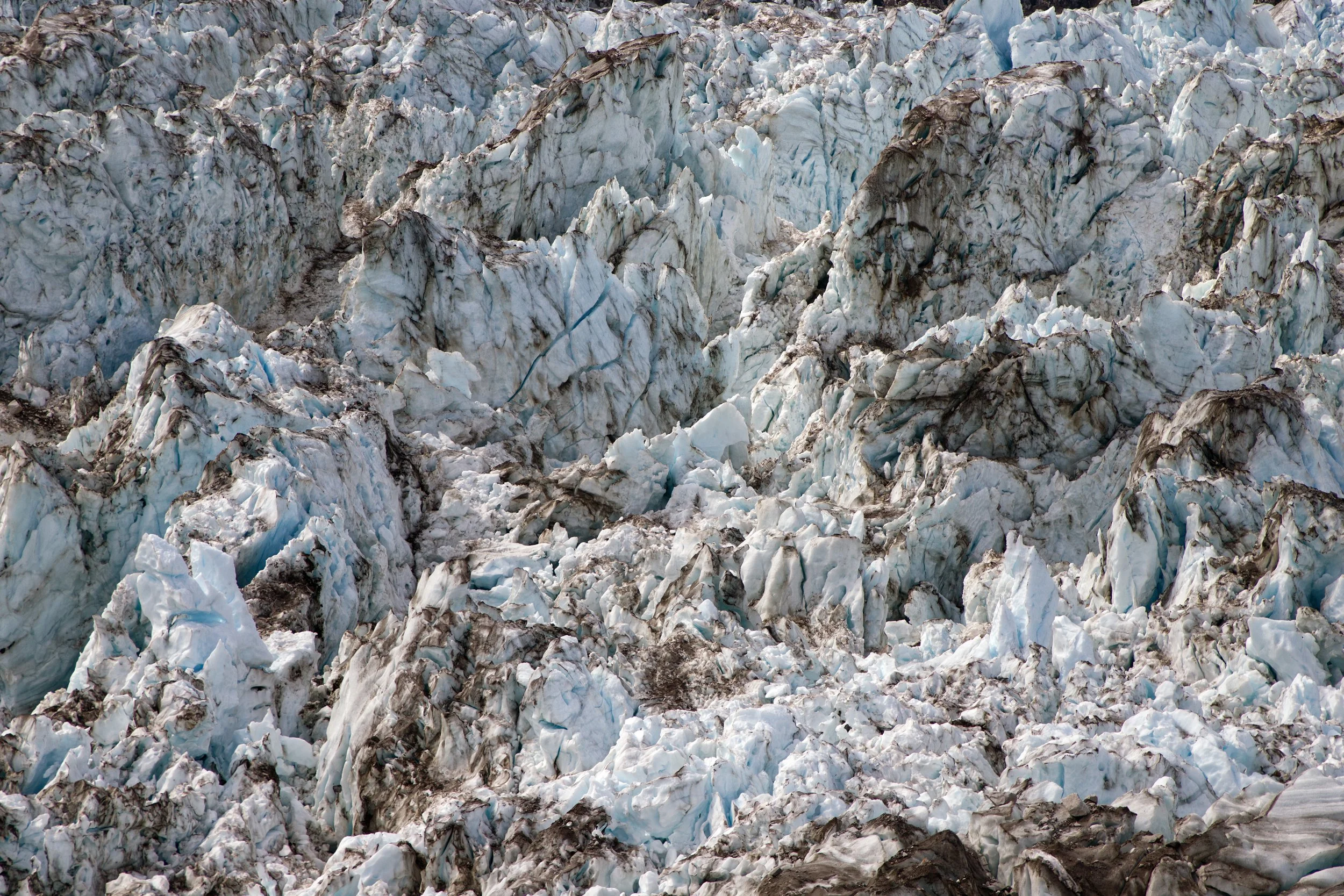
Leslie Reid, RCA Lowell Glacier: Surge, 2024
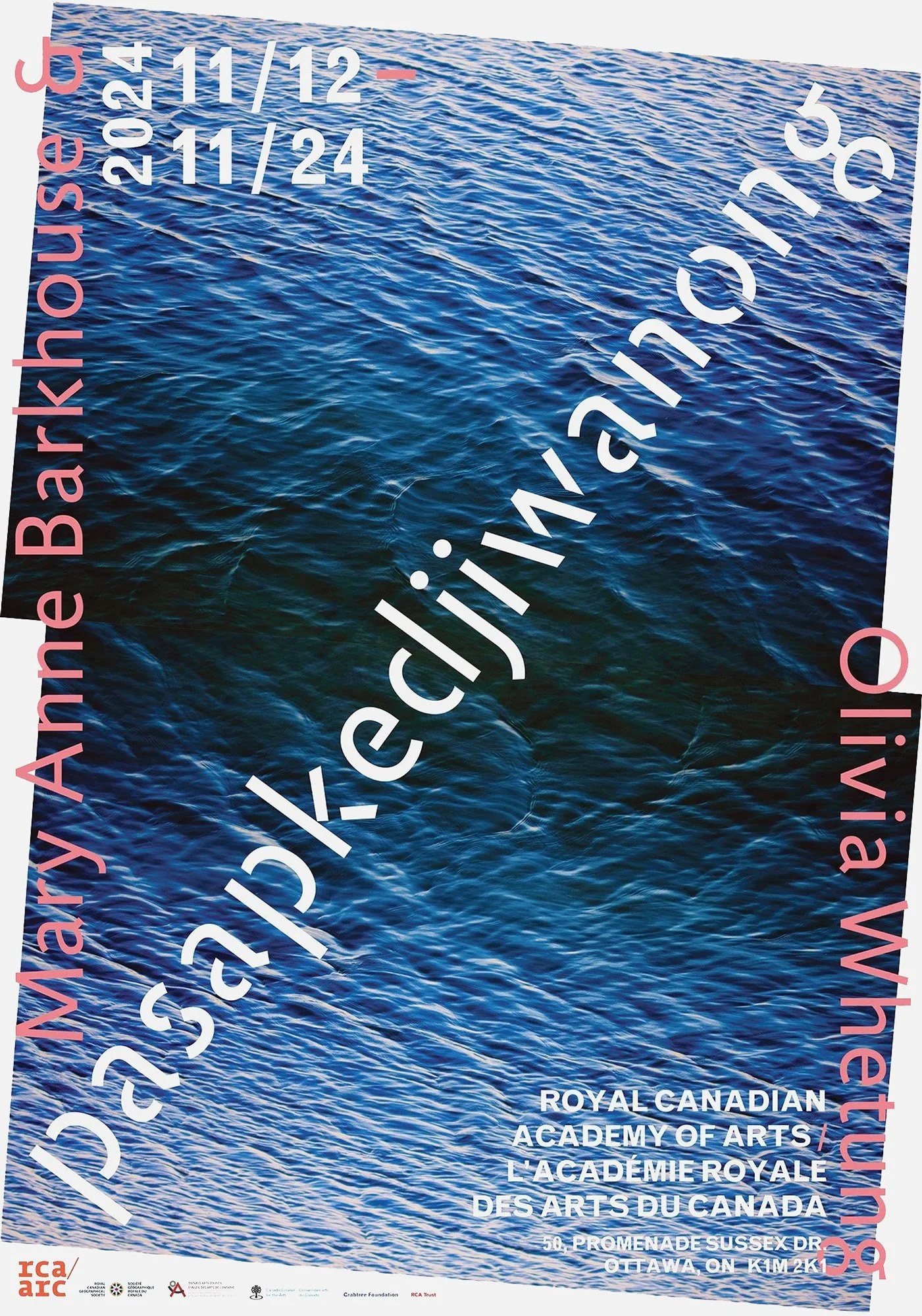
pasapkedjiwanong: Mary Anne Barkhouse and Olivia Whetung. Poster by Henk van Assen, 2024
—pasapkedjiwanong: Mary Anne Barkhouse & Olivia Whetung (2024)
pasapkedjiwanong was a two-person exhibition of new works by Mary Anne Barkhouse and Olivia Whetung, which were provocatively displayed in the Upper Gallery overlooking the confluence of the Rideau, Gatineau, and Ottawa rivers, adjacent to the Rideau Falls’ cascade into the Ottawa River. As a title composed in Typotheque foundry’s Jigsaw Stencil, ‘pasapkedjiwanong’, (Anishinàbemowin for “the river that passes between the rocks”) suggests the turbulence, as well as beauty, of the history of the region. The works in this exhibition responded to the damage done to Indigenous homelands by industry, extraction, and colonialism. The decimation of natural resources such as wildlife and timber, through Settler colonization of waterways — such as canal and dam construction — have had dire consequences on the ability of Indigenous persons to sustain themselves in a landscape that has been devastated. Moreover, the swamps and forests that nurture biodiversity have been ravaged. Using an imagery of native plants, non-human animals, forests, and wetlands, the works in this exhibition explore themes of grief and resilience in the wake of this devastation, and the persistence of the wild. The exhibition’s catalogue includes an essay by Dr. Carmen Robertson, a Scots-Lakota professor of art history at Carleton University. Mary Anne Barkhouse is a member of the ‘Namgis First Nation of Alert Bay, BC and a citizen of the Kwakwaka’wakw Nation. Olivia Whetung is a member of Curve Lake First Nation and citizen of the Nishnaabeg Nation. The RCA thanks the artists and Dr. Carmen Robertson for participation, and Art Gallery of Peterborough, Royal Canadian Geographical Society and Crabtree Foundation for their support. See the catalogue here.
November 12 to November 24, 2024 Hours: 10 am to 4 pm, closed Sundays Royal Canadian Academy of Arts
50 Sussex Drive
Ottawa, ON K1M 2K1
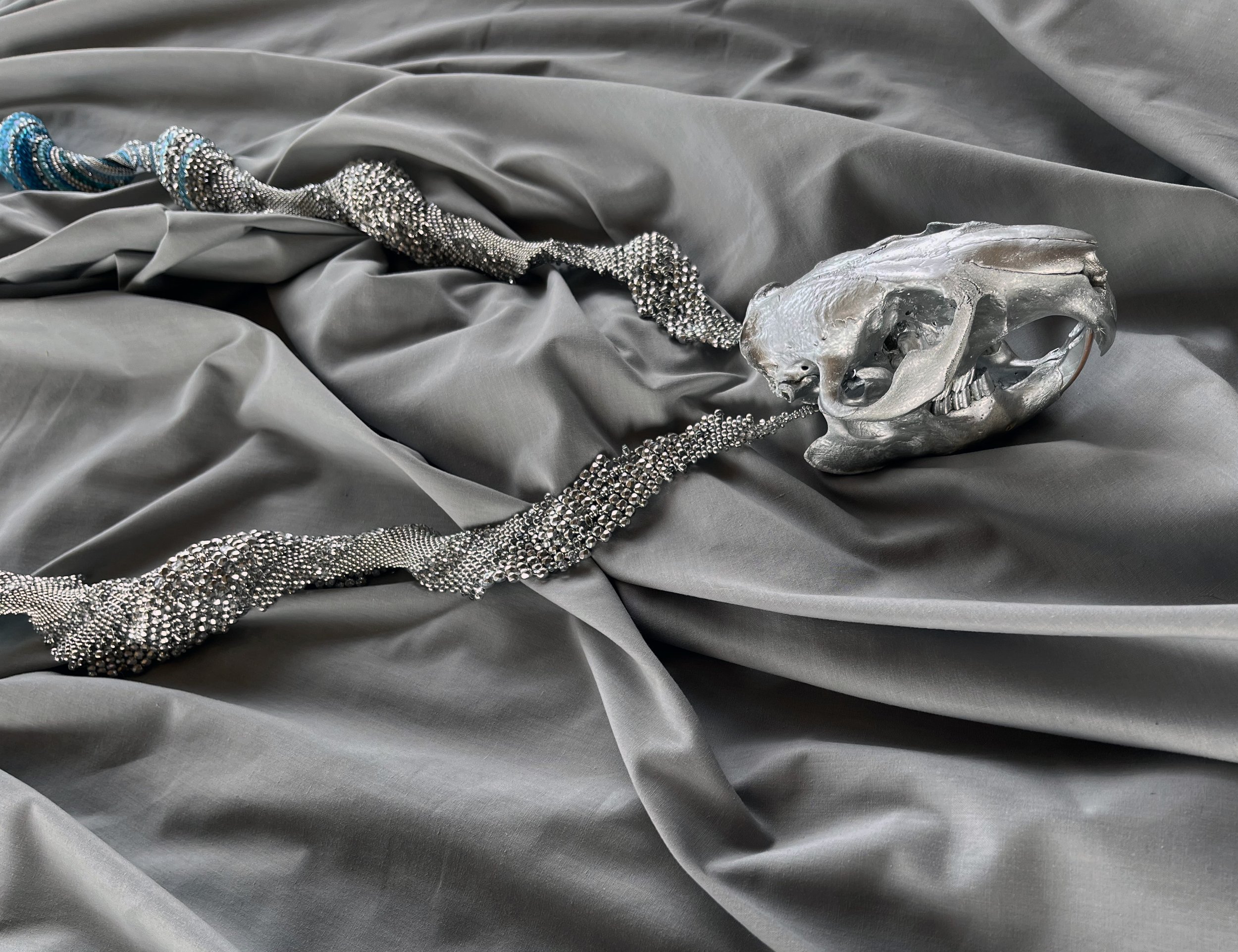
Detail of Olivia Whetung’s Wake in pasapkedjiwanong: Mary Anne Barkhouse & Olivia Whetung
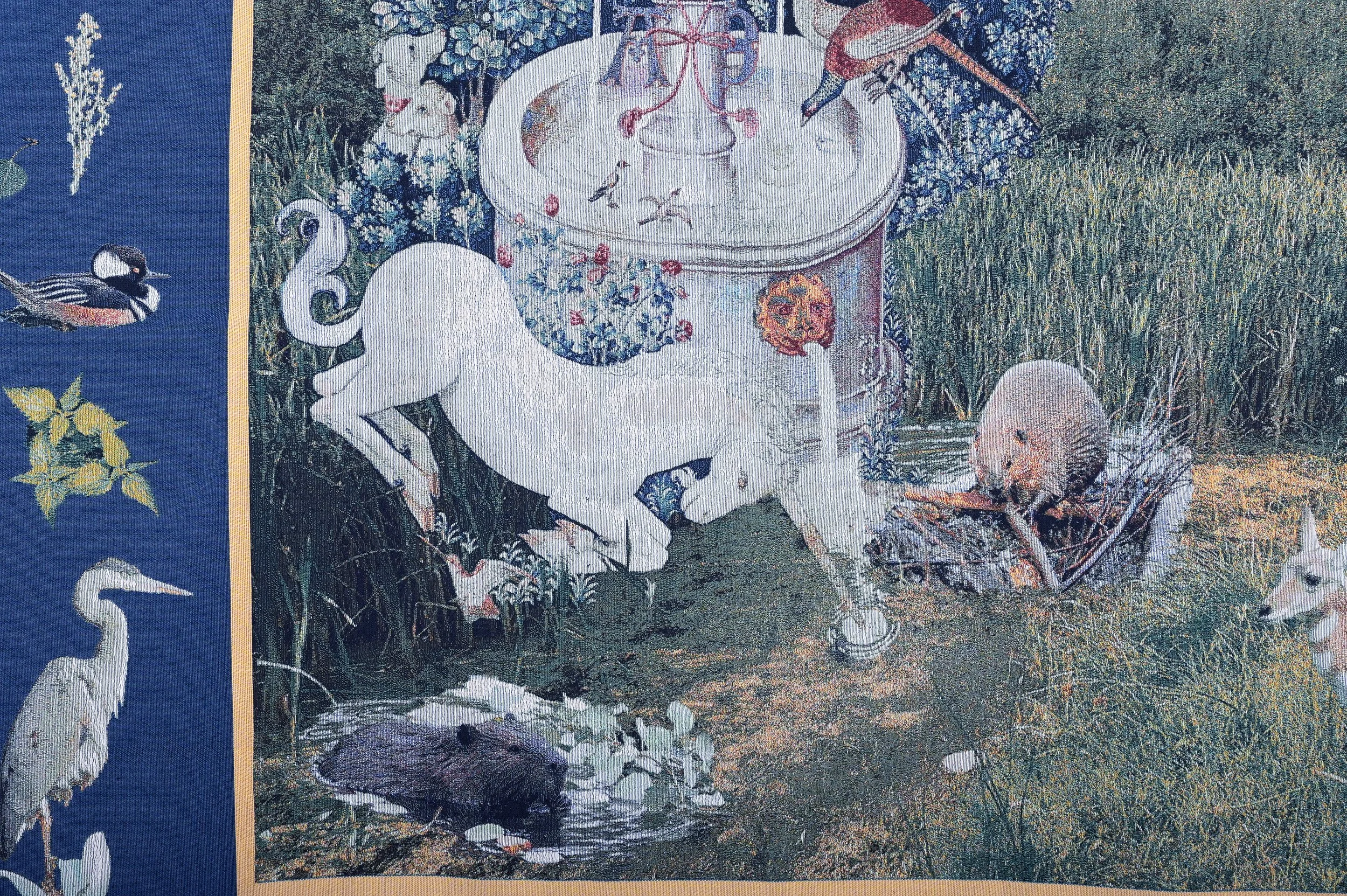
Mary Anne Barkhouse, RCA Acta Sanctorum (the Deeds of the Saints) (detail) in pasapkedjiwanong: Mary Anne Barkhouse & Olivia Whetung
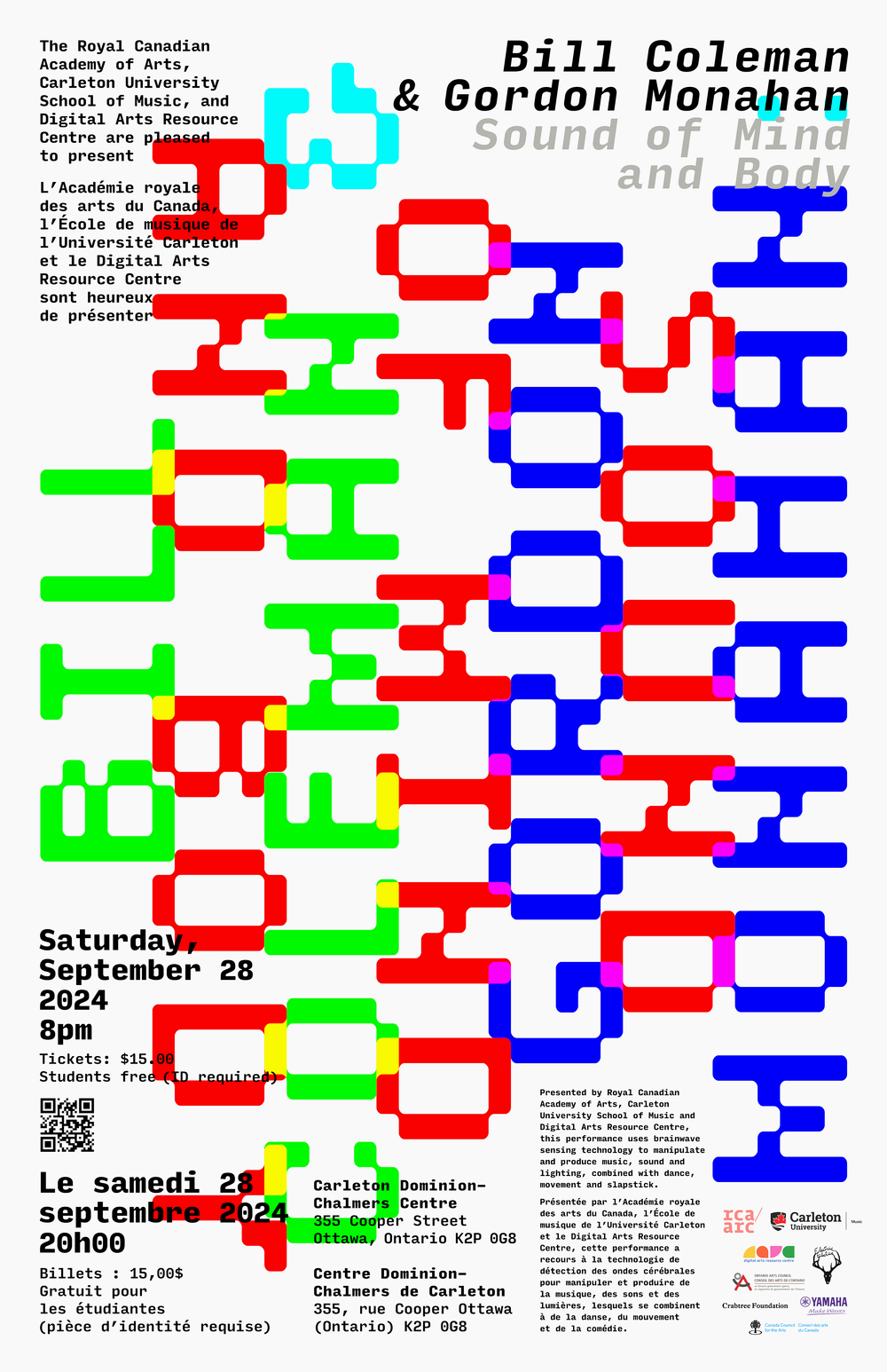
Bill Coleman and Gordon Monahan: Sound of Mind & Body. Poster by Henk van Assen, 2024
—Bill Coleman and Gordon Monahan: Sound of Mind & Body (2024)
Presented with DARC and Carleton University School of Music, this performance used brainwave sensing technology to produce sound, music, and movement in an extraordinary performance in the restored Sanctuary of Carleton Dominion-Chalmers Centre, Ottawa. This collaboration by Bill Coleman and Gordon Monahan uses concepts of human-to-computer brainwave interfacing to manipulate and produce real-time music, sound and lighting, integrated with dance, body performance and slapstick. An EEG interface worn by dancer-choreographer Coleman sends data to several Max/MSP software patches in real-time. As Coleman shifts through various states of mental and physical concentration and movement, he is able to produce and control alpha-brainwaves while dancing. He uses these alpha waves in conjunction with Monahan’s software manipulations, to produce various responses in musical instruments such as piano and percussion, to control the fading of stage lights, and to control sound spatialization and audio processing, all in real-time. Monahan simultaneously controls several Max/MSP software patches on stage that harness Coleman’s brain signals to sculpt soundwaves, light, instrumental composition and kinetic actions into a progressively layered multi-media artwork.
Historical note: This piece follows in the tradition of brainwave music composition pioneered by Alvin Lucier, David Rosenboom, Richard Teitelbaum, and others, beginning in the 1960s. In fact, the history of brainwaves and sound reproduction dates back to 1928, when the British scientist Edgar Adrian (1889–1977) was the first to successfully sonify human brainwaves (EEG) in laboratory experiments. Special thanks to the Crabtree Foundation.
September 28, 2024, 8 pm Carleton Dominion-Chalmers Centre 290 Lisgar Street Ottawa, ON K2P 0G8 Tickets $15, students free
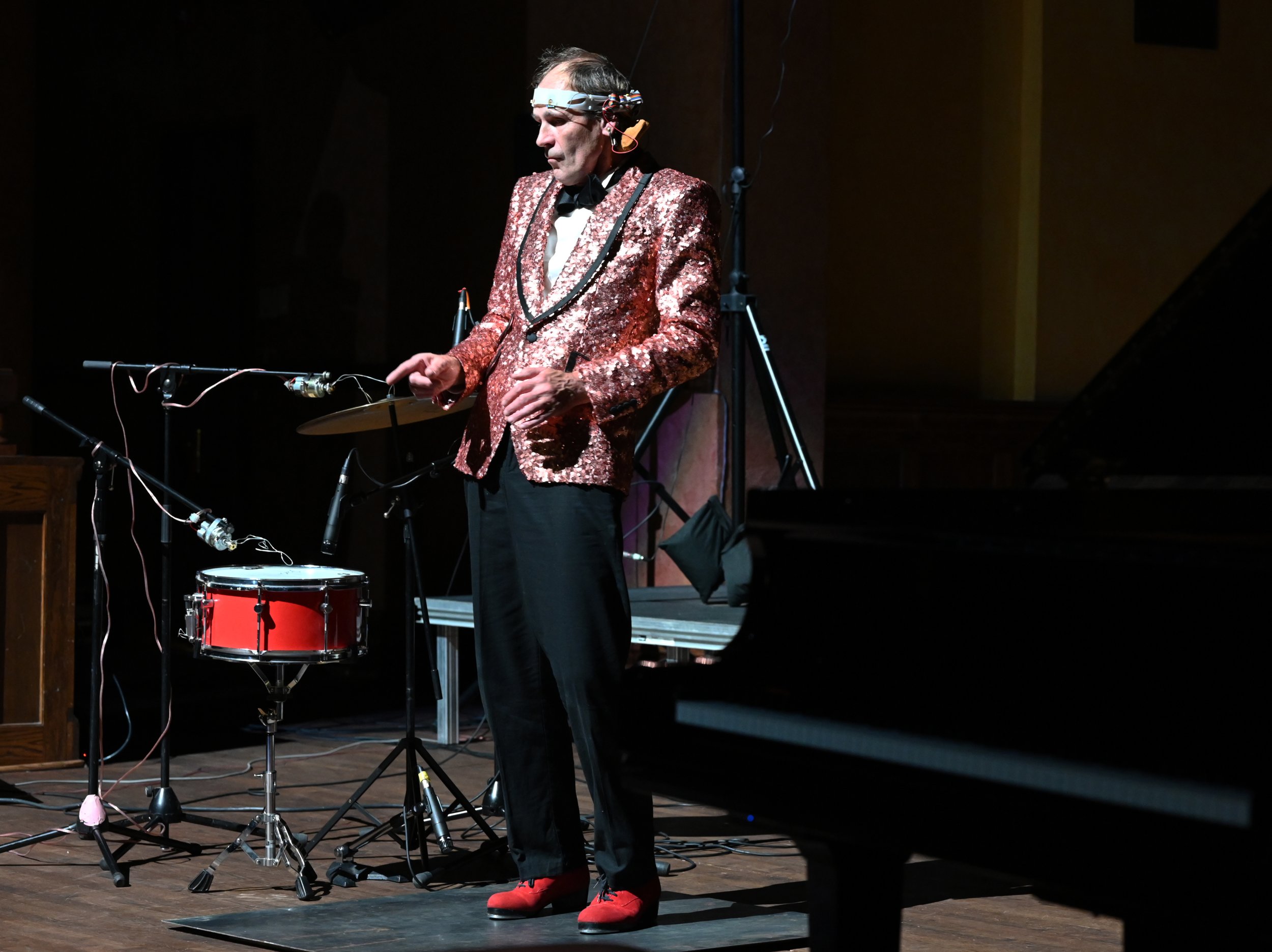
Bill Coleman performing during Bill Coleman and Gordon Monahan: Sound of Mind & Body
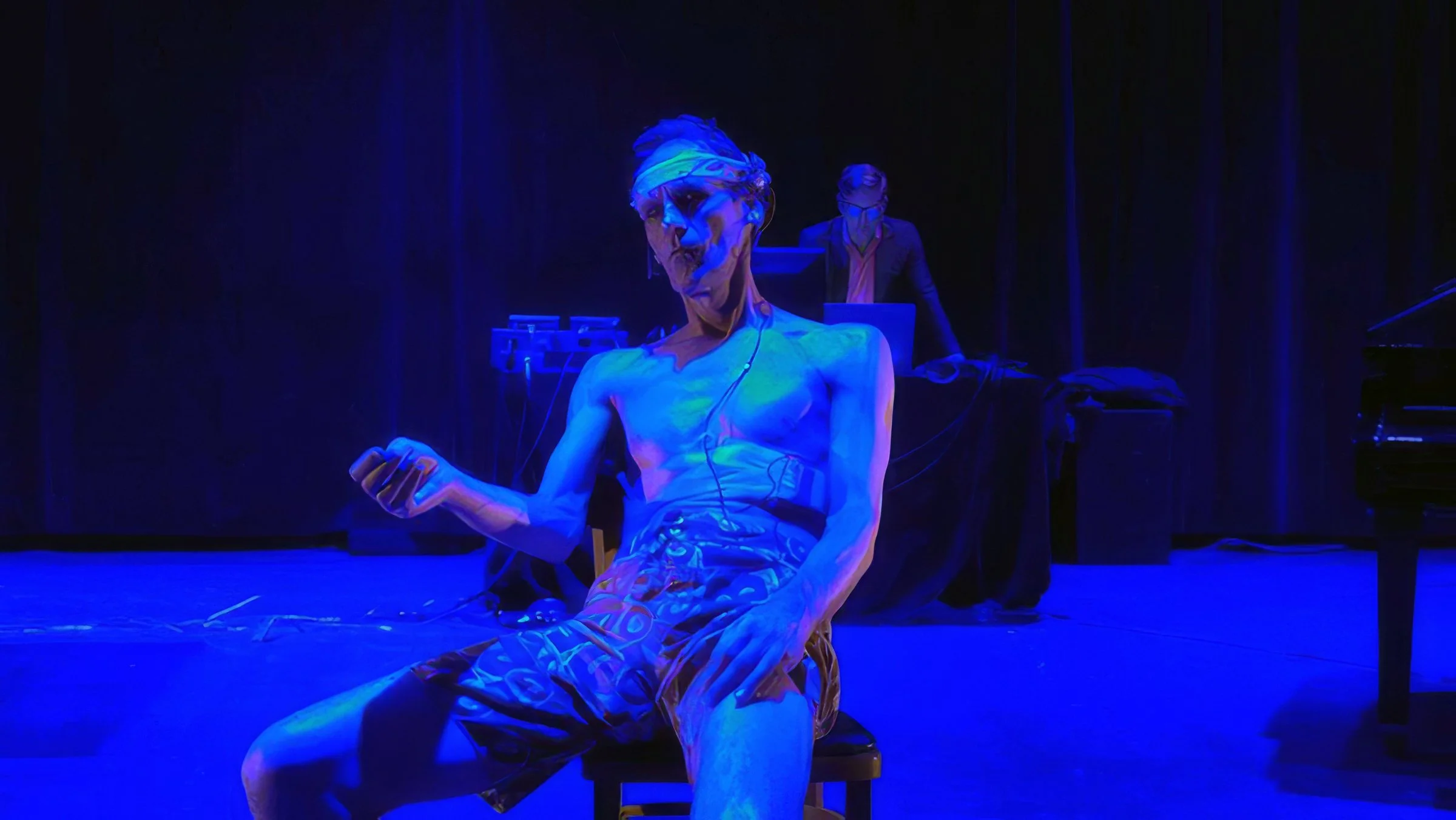
Bill Coleman (foreground) and Gordon Monahan, RCA (rear) performing during Bill Coleman and Gordon Monahan: Sound of Mind & Body
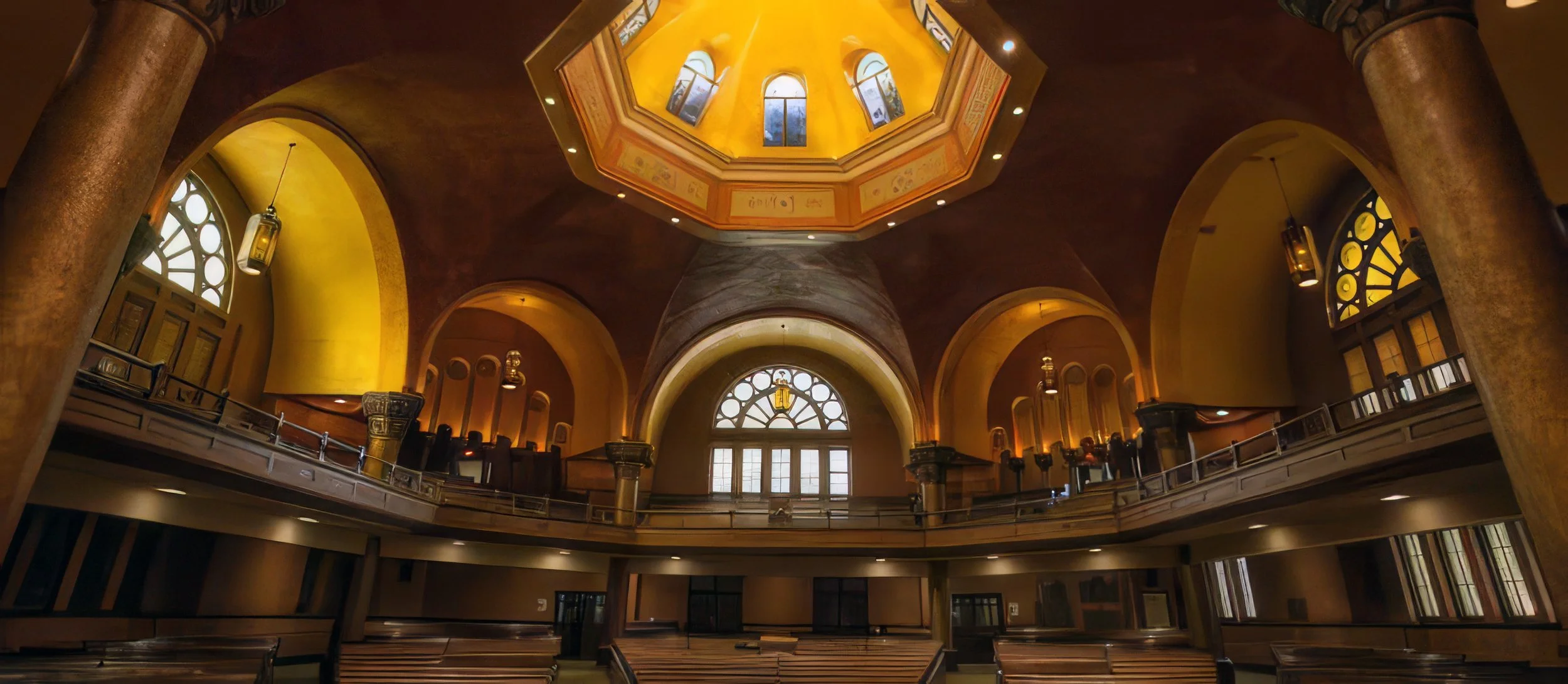
Carleton Dominion-Chalmers Centre Sanctuary
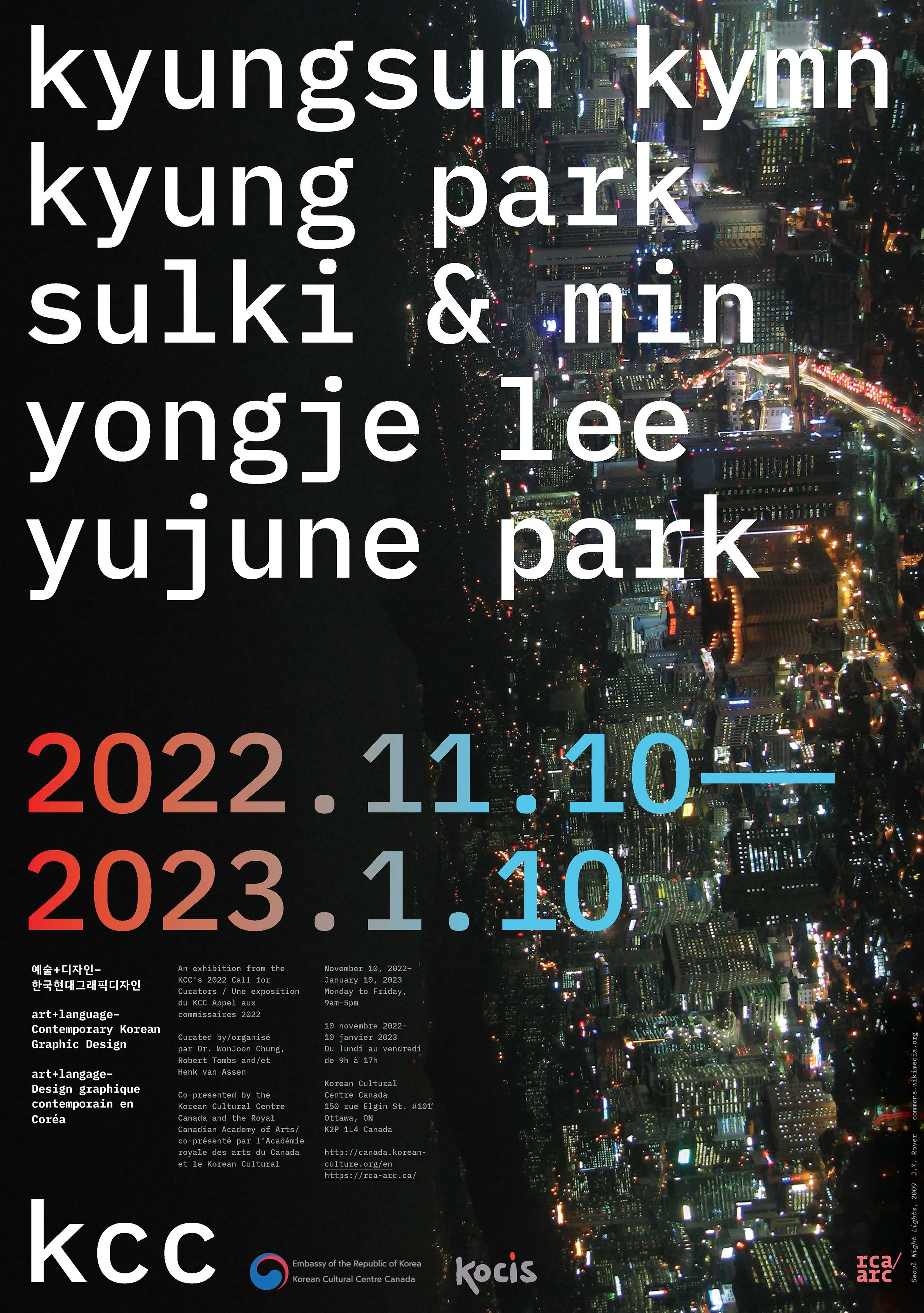
art+language: Contemporary Korean Graphic Design. Poster by Robert Tombs, 2022
—art+language: Contemporary Korean Graphic Design, Korean Cultural Centre Canada (2022–23)
The RCA was selected through a jury process to present the exhibit art+language: Contemporary Korean Graphic Design at the Korean Cultural Centre Canada in Ottawa, from November 10, 2022 to January 10, 2023. This exhibit featured the work of artist/designers Kyungsun Kymn, Kyung Park, YuJune Park, Sulki & Min, and Yongje Lee, and featured a range of exemplary work in video and generative video, installation, book and poster design, letterpress printing, web site design, and Hangeul font design. The conceptual hybridity expressed in these works, of being simultaneously influenced by both Eastern and Western traditions, contributes to South Korea having one of the most vital national graphic design traditions today. This exhibit was curated by Professor WonJoon Chung (Carleton University), Professor Henk van Assen (Yale University) and Robert Tombs (RCA). The RCA thanks the Korean Cultural Centre Canada for their support and collaboration on this project.
Korean Cultural Centre Canada 150 Elgin St, #101 Ottawa, ON K2P 2P8

art+language: Contemporary Korean Graphic Design Korean Cultural Centre Canada, 2022–23

art+language: Contemporary Korean Graphic Design Korean Cultural Centre Canada, 2022–23

art+language: Contemporary Korean Graphic Design Korean Cultural Centre Canada, 2022–23

YuJune Park, with students of Parsons School of Design Translations, 2020 Amsterdam University of the Arts Press

Sulki & Min Cosmos, 2017 Specter Press
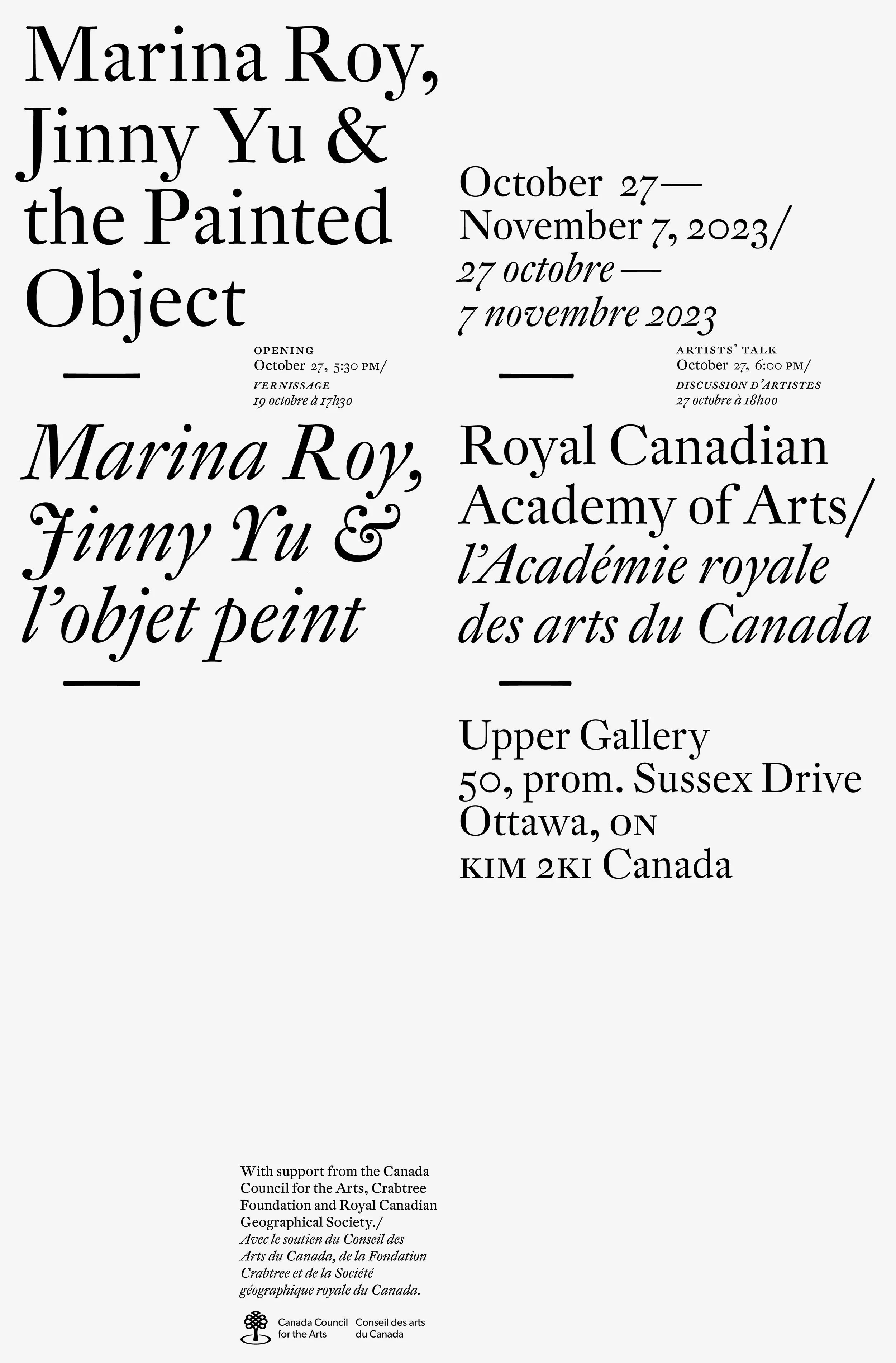
Marina Roy, Jinny Yu & the Painted Object. Poster by Robert Tombs, 2023
—Marina Roy, Jinny Yu & the Painted Object,
Royal Canadian Academy of Arts (2023)
This exhibition was comprised of two painted works — by contemporary artists Marina Roy and Jinny Yu — who each use paint amongst an array of art media within unique studio practices. As newly-created responses to the extraordinary limestone, sandstone and shale promontory upon which the modernist white Upper Gallery space is situated — overlooking the confluence of the Rideau, Gatineau and Ottawa rivers — and with an appreciation of the commingling histories of its Indigenous and settler occupants, each artist referenced the many colonial intrusions into the unceded ancestral territory of the Anishinabe Algonquin Nation that began in the early 1600s. Both Roy and Yu’s ongoing dialogues with painting, whether in abstract or representative terms, include references to material, process, identity, and the Anthropocene. This was Roy and Yu’s first exhibit together. The RCA thanks the Crabtree Foundation and the Canada Council for the Arts for their support. See the catalogue here.
October 27 to November 7, 2023 Hours: 10 am to 4 pm, closed Sundays Royal Canadian Academy of Arts
50 Sussex Drive
Ottawa, ON K1M 2K1

Marina Roy, Jinny Yu & the Painted Object
Royal Canadian Academy of Arts, 2023

Marina Roy, RCA
Flog and Pelt (detail), 2023

Jinny Yu, RCA
Perpetual Guest 2019/2022 Impossibility of Repair, 2023
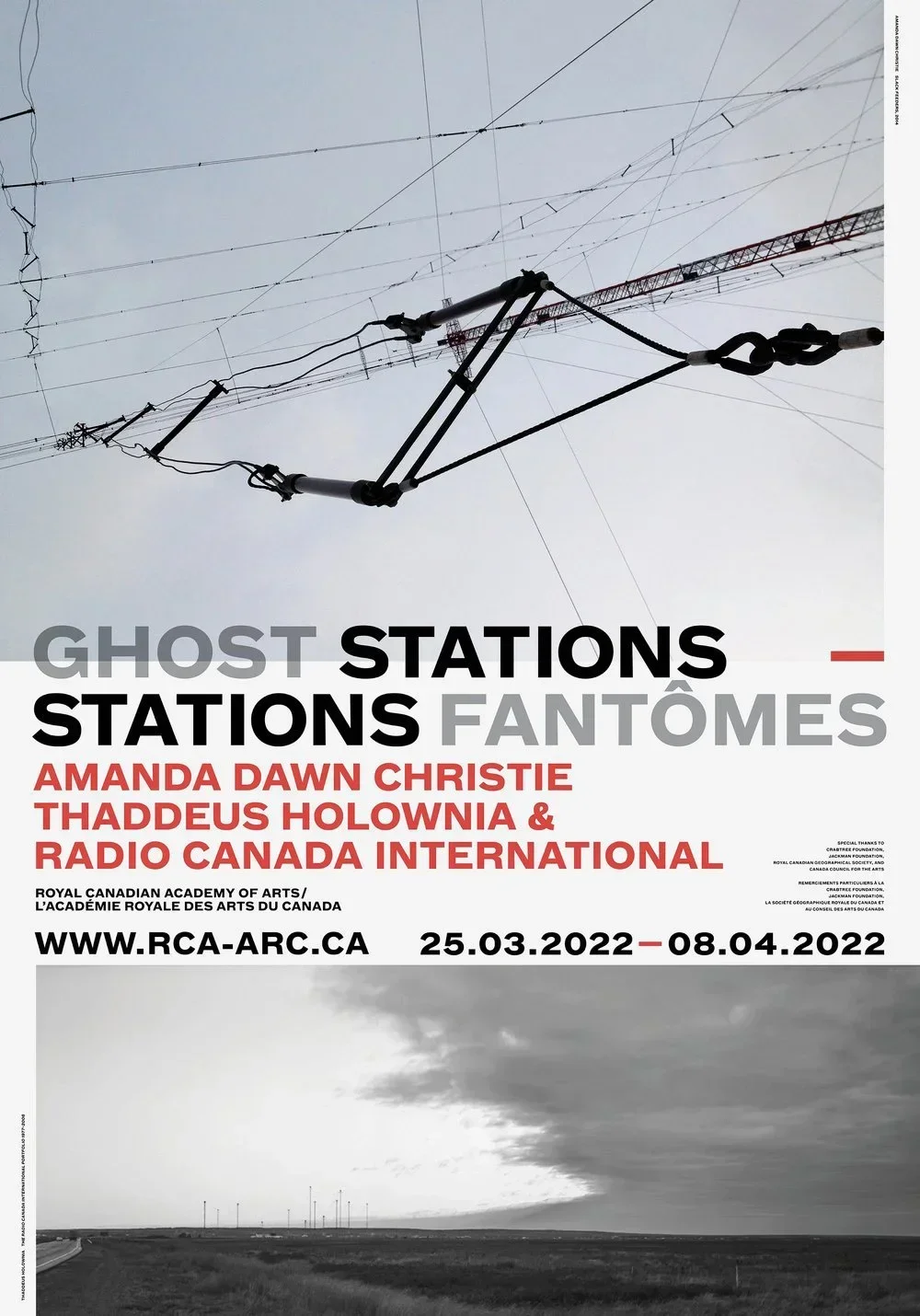
Ghost Stations: Amanda Dawn Christie, Thaddeus Holownia & Radio Canada International. Poster by Henk van Assen, 2022
—Ghost Stations: Amanda Dawn Christie, Thaddeus Holownia & Radio Canada International, Royal Canadian Academy of Arts (2022)
This exhibition was comprised of multiple works including a sound installation, digital stills and a film by Amanda Dawn Christie, Spectres of Shortwave/Ombres des ondes courtes (2016), and a portfolio of banquet camera format silver gelatin contact photographs by Thaddeus Holownia, The Radio Canada International Portfolio 1977–2006. It documented, in still and moving image, aspects of the 13 now-demolished shortwave towers of Radio Canada International’s installation on the Tantramar Marshes of Sackville, New Brunswick. With these documents of Modernity’s industrial footprint, the exhibition positioned the work of Christie and Holownia at a rich intersection of art and telecommunications engineering. The RCA thanks the Crabtree Foundation and the Canada Council for the Arts for their support. See the book here.
March 23 to April 4, 2022 Hours: 10 am to 4 pm, closed Sundays Royal Canadian Academy of Arts
50 Sussex Drive
Ottawa, ON K1M 2K1

Ghost Stations: Amanda Dawn Christie, Thaddeus Holownia & Radio Canada International Royal Canadian Academy of Arts, 2022

Ghost Stations: Amanda Dawn Christie, Thaddeus Holownia & Radio Canada International Royal Canadian Academy of Arts, 2022

Ghost Stations: Amanda Dawn Christie, Thaddeus Holownia & Radio Canada International Royal Canadian Academy of Arts, 2022

Ghost Stations: Amanda Dawn Christie, Thaddeus Holownia & Radio Canada International Royal Canadian Academy of Arts, 2022

Ghost Stations: Amanda Dawn Christie, Thaddeus Holownia & Radio Canada International Royal Canadian Academy of Arts, 2022

Thaddeus Holownia, RCA
Untitled, from Radio Canada International Portfolio, 1977–2006

Amanda Dawn Christie
Spectres of Shortwave/Ombres des ondes courtes, 2016
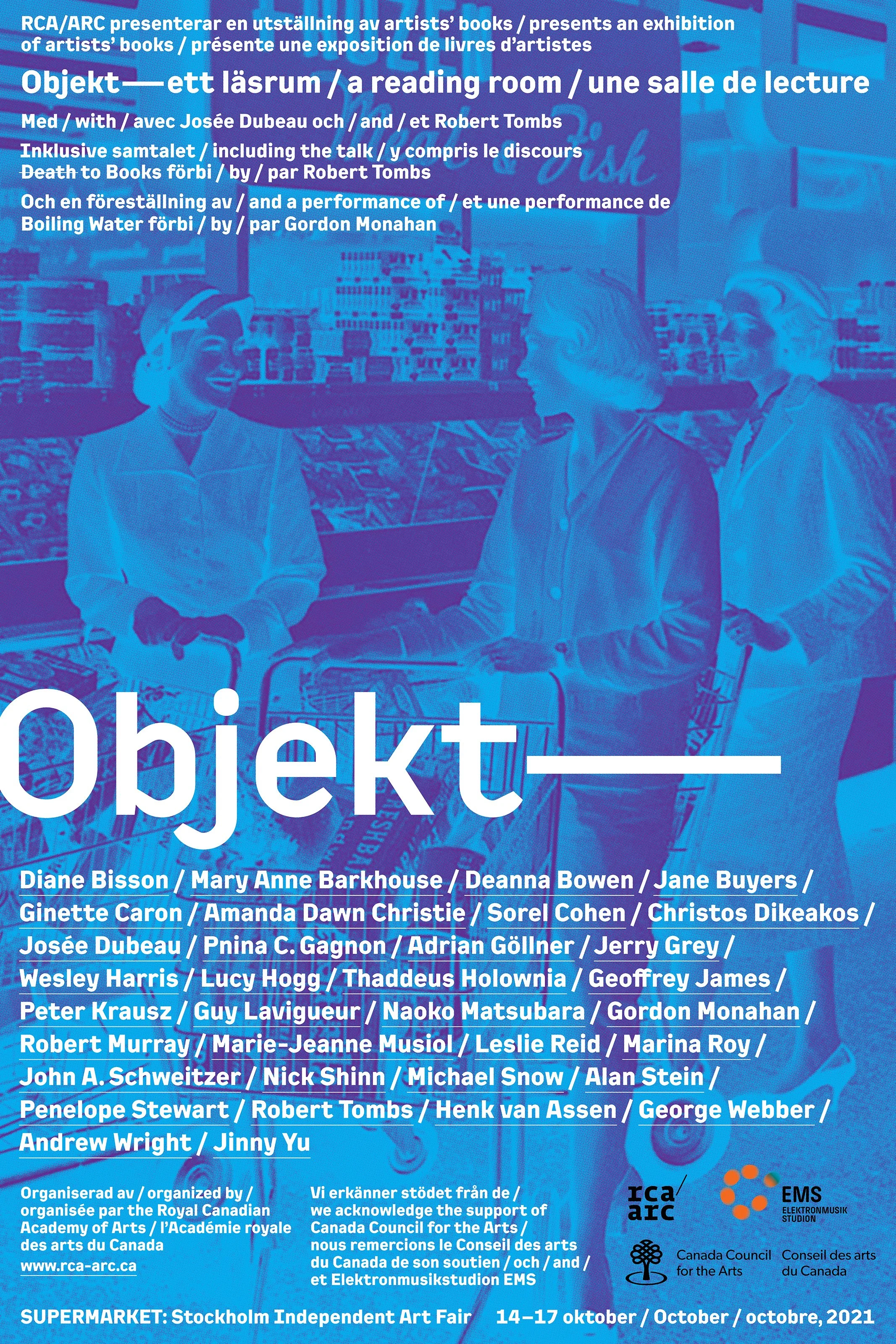
Objekt: ett läsrum/a reading room/une salle de lecture. Poster by Robert Tombs, 2021

Robert Tombs, RCA Robert Tombs: Index. Graphic Works 1985–2015, 2015
—Objekt: ett läsrum/a reading room/une salle de lecture, Stockholm, SE (2021)
Objekt: ett läsrum/a reading room/une salle de lecture, an exhibit of 56 book works by RCA members and selected Passages guests, was held at SUPERMARKET: Stockholm Independent Art Fair. Participants were Mary Anne Barkhouse, Diane Leclair Bisson, Deanna Bowen, Jane Buyers, Ginette Caron, Amanda Dawn Christie, Sorel Cohen, Christos Dikeakos, Josée Dubeau, Pnina C. Gagnon, Adrian Göllner, Jerry Grey, Wesley Harris, Lucy Hogg, Thaddeus Holownia, Geoffrey James, Peter Krausz, Guy Lavigueur, Naoko Matsubara, Gordon Monahan, Robert Murray, Marie-Jeanne Musiol, Leslie Reid, Marina Roy, John A. Schweitzer, Nick Shinn, Michael Snow, Alan Stein, Penelope Stewart, Robert Tombs, Henk van Assen, George Weber, Andrew Wright and Jinny Yu. We also co-presented, with the artiists’ organization Elektronmusikstudion EMS, a performance by the composer and sound artist Gordon Monahan, Boiling Water (2016). The library of Konstfack: University of Arts, Crafts and Design, Stockholm acquired the bookworks following SUPERMARKET. Special thanks to Canada Council for the Arts.
October 14 to October 17, 2021 SUPERMARKET: Stockholm Independent Art Fair Stadsgårdsterminalen SE-116 45 Slussen Stockholm, SE
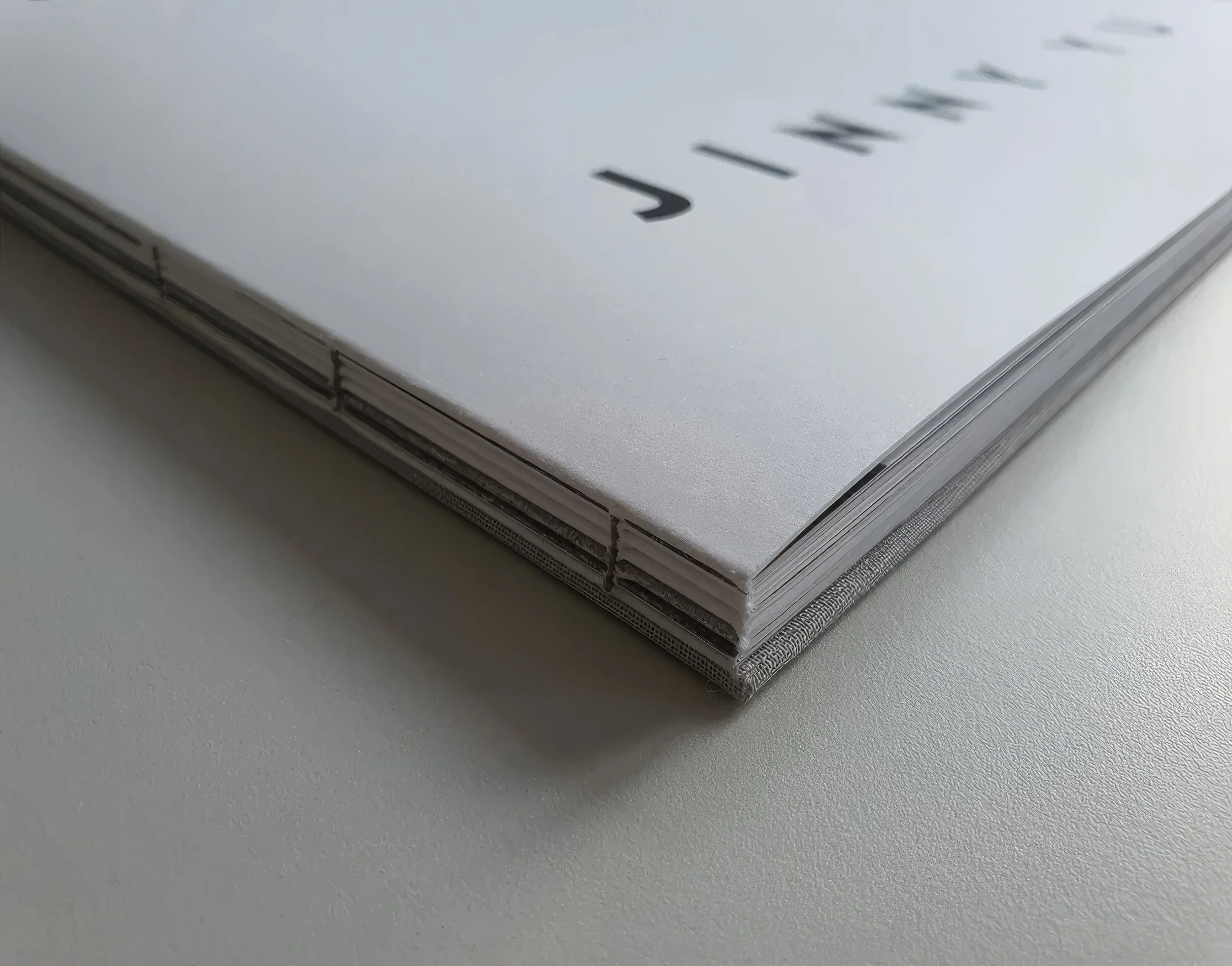
Jinny Yu, RCA Hôte, 2010

Gordon Monahan, RCA
Boiling Water, 2016
Performance at Kammerspiele Bonn Bad Godesberg, presented by bonn-hoeren and the Beethoven Foundation, Bonn, DE

Christine Fitzgerald, RCA
Kahentínehtha’ Horn, 2019
—Personae: Indigenous and Canadian Portraits, 1861–2020, Portrait Gallery of Canada (2020)
Curated by the RCA, Personae: Indigneous and Canadian Portraits 1861–2020 is an exhibition of portraits by artists Wally Dion, Christine Fitzgerald, Thaddeus Holownia, Ruth Kaplan, Peter Krausz, Arnaud Maggs, William Notman, Karen Stentaford, Stephen Stober, Herbert Taylor, and Robert Tombs. Any landscape where language, identity and territory are contested to the extent that they are in Canada provides numerous pitfalls to any curator who attempts to assemble a representative group portrait. Personae, while negotiating the proverbial tightrope of national portrayal, is ultimately an exhibition of work by ten artists who are each engaged, in various ways, with identity, history, processes, and thematic caprices. The viewer will hopefully be mindful that ‘art’ is a stage, and its performances here, whether graphic or photographic, are things that should be examined through a critical lens, and indeed questioned. Moving beyond this myriad of motivations and techniques, still unanswered is an essential question: who can say what a Canadian is? Afterall, we are a people who define ourselves by what we are not.
> See the on-line exhibition here.